Category: Board

Select Educational Board

  • Probability | Study

    Probability | Study


    Pre-Requisires

    Test & Enrich

    English Version
    Hindi Version

    Assessments

    Personalised Assessments

  • Cuboid And Cube

    Cuboid

    What is a cuboid?

    Introduction To Cuboid

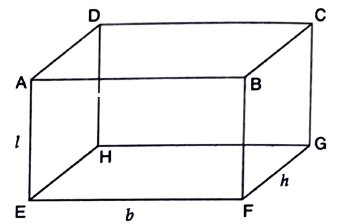
    A cuboid is a three-dimensional geometric shape that resembles a rectangular box or a rectangular prism. A cuboid has 3 Pairs of opposite, congruent and parallel rectangular faces, 12 edges, and 8 vertices.

    Note 1: All squares are rectangles, But All rectangles need not to be squares.

    Note 2: Cuboid may have one, or three equal pairs of squares. (Square is a special type of Rectangle.

    Note 3: If All one pair of opposite faces of a cuboid are squares then it it becomes an Equilateral Cuboid.

    Note 3: If All three pairs of faces of a cuboid are squares then it it becomes a Cube.

    Note 4: A Equilateral Cuboid and Cube is a special types of cuboid.

    See case study ↗

    Perfect Labelled Cuboid

    Parts And Their Alignment Of A Cuboid

    Faces

    The flat surfaces of a cuboid are known as its faces.

    A cuboid has six faces, and each face is a rectangle.

    These faces are arranged such that three pairs of opposite faces are parallel to each other.

    The adjacent faces are perpendicular to each other (i.e., the angle between any two touching faces of a cube is right angle, 90°. 

    • Note 1: All squares are rectangles.
    • Note 2: Rectangle may have one or two pairs of squares.
    • Note 3: If All three pairs of faces of a rectangle are squares then it it becomes a Cube.
    • Note 4: A cube is a special case of cuboid.

    Edges

    An edge is a line segment where the two surfaces of a cuboid meet.

    There are 12 edges in a cuboid, where three edges meet at each vertex. 

    All edges form right angles with the adjacent edges and faces.

    Vertices

    A vertex is a point where the three edges meet. Vertices is the plural of vertex.

    Cuboid has eight vertices.

    Diagonals

    Diagonal of a cuboid is a line segment that joins two opposite vertices.

    The cuboid has four space diagonals.

    Length of the diagonal of cuboid = √(length2 + breadth+ height2) units.

    Symmetry 

    Cuboids exhibit high symmetry

    They have rotational symmetry of order 4, meaning that you can rotate them by 90 degrees about their centre and they will look the same.

    Features of a Cuboid

    It is a three-dimensional, Rectangular figure.

    It has 6 faces, 12 edges, and 8 vertices.

    All 6 faces are rectangles.

    Each vertex meets three faces and three edges.

    The edges run parallel to those parallel to it.

    All angles of a cuboid are right angles.

    Mensuration of Cuboid

    What Is Diagonal Of A Cuboid? 

    The diagonal of a cuboid is the line segment that connects two opposite vertices of the cuboid. In other words, it is the longest line that can be drawn inside the cuboid.

    Clculating The Length Of Diagonal Of A Cuboid? 

    To calculate the length of the diagonal, we need to know the lengths of all three edges of the cuboid. Let’s call these edges l, w and h. The length of the diagonal is then given by the following formula:

    d = √(l² + w² + h²)

    For example, let’s say that we have a cuboid with edges that are all equal to two meters. In this case, the length of the diagonal would be:

    d = √(l² + w² + h²)

    Example: if l = 3 cm, b = 2cm, h = 1cm, Find is longest diagonal

    The longest diagonal of a cuboid = d = √(l² + w² + h²)

    On substituting the values we get

    d = √(3² + 2² + 1²) = √(9 + 4 +1) = √14 cm

    Therefore, the length of the diagonal is fourteen meters.

    Surface Area of a Cuboid

    The total surface area of a cuboid is defined as the area of its surface (Appearing face). 

    The Lateral Surface Area of a Cube.

    Imagine yourself sitting in a cuboid shaped room. You can then see the four walls around you. This denotes the lateral surface area of that room. 

    That is, the lateral surface area of a cuboid shaped room is the area of its four walls, excluding the ceiling and the floor.

    The lateral surface area of the cuboid is the sum of areas of its square faces, excluding the area of the top and the bottom face.

    So the lateral surface area of a cube = sum of areas of 4 faces = (Length ✕ Height) + (Length ✕ Height) + (Length ✕ Height) + (Breadth ✕ Height) + (Breadth✕ Height)

    Derivation of Total Surface Area of a Cuboid

    Since the total surface area of a cuboid (TSA) is the area of its surface. 

    Total surface area of a cuboid = Lateral Surface Area + Area Of Bottom Surface + Area Of Top Surface

    Total surface area of a cuboid = Area Of Front Surface + Area Of Back Surface + Area Of Left Srface + Area Of Right Surface + Area Of Bottom Surface + Area Of Top Surface

    Total surface area of a cuboid = Lateral Surface Area 2[Area Of Bottom Surface]

    Since Area Of Top Surface = + Area Of Bottom Surface We get, Total surface area of a cuboid = Lateral Surface Area + 2[Area Of Top Surface]

    TSA = (Length ✕ Height) + (Length ✕ Height) + (Length ✕ Height) + (Breadth ✕ Height) + (Breadth✕ Height) + (Length ✕ Breadth) + (Length ✕ Breadth)

    TSA = 2(Length ✕ Height) + 2(Breadth ✕ Height) + 2(Length ✕ Breadth)

    TSA = 2[(Length ✕ Height) + (Breadth ✕ Height) + (Length ✕ Breadth)]

    The Volume of a Cube 

    Volume

    The volume of a three-dimensional object can be defined as the space required for it.

    Similarly, Volume of a cuboid is defined as the space required for the cuboid or the Space occupied by the cuboid.

    The volume of a cuboid can be calculated using the formula, V = lbh, where,

    l = length, b = breadth or width, h = height

    This formula shows that the volume of a cuboid is directly proportional to its length, breadth and height.

    The volume is calculated by multiplying the object’s length, breadth, and height.

    Hence the volume of the cube = lbh = lenth ✕ breadth ✕ height

    Cuboids in Our Daily Life

    • Cuboids are commonly used in everyday objects, such as boxes, books, and building blocks.
    • They are used in architectural and engineering designs for modeling rooms, buildings, and structures.
    • In mathematics and geometry, cuboids serve as fundamental examples for teaching and understanding concepts related to three-dimensional shapes.

    Similar Shapes:

    • A cube is a special type of cuboid where all sides are equal in length, making it a regular hexahedron.

    Real-world Examples:

    • A shoebox is an example of a cuboid.
    • Most refrigerators, ovens, and TV screens have cuboidal shapes.
    • Buildings and houses often have cuboidal rooms.

    Fun Fact:

    • Cuboids are among the simplest and most familiar three-dimensional shapes, making them a fundamental concept in geometry.

    Remember that these notes provide an overview of cuboids, and there are more advanced topics and applications related to this shape in various fields of study.

    What is a cube?

    A cube is a three-dimensional regular polyhedron characterised by its 6 Identical (Congruent) Squares in which 3 Pairs of them parallel.

    Parts And Their Alignment Of In A Cube

    Faces

    The flat surfaces of a cube are known as its faces.

    A cube has six faces, and each face is a perfect square. These faces are arranged such that three pairs of faces are parallel to each other.

    The adjacent faces are perpendicular to each other (the angle between any two touching faces of a cube is right angle, 90°.

    All the edges have the same length. 

    A cube also has 8 vertices and 12 edges. 

    Edges

    An edge is a line segment where the two surfaces of a cube meet.

    There are twelve edges in a cube, where three edges meet at each vertex. 

    All edges have equal length and form right angles with the adjacent edges and faces.

    Vertices

    A vertex is a point where the three edges meet. Vertices is the plural of vertex.

    Cube has eight vertices.

    Diagonals

    The cube has four space diagonals that connect opposite vertices, each of which has a length of √3 times the length of an edge.

    Symmetry 

    Cubes exhibit high symmetry

    They have rotational symmetry of order 4, meaning that you can rotate them by 90 degrees about their centre and they will look the same.

    Features of a Cube 

    It is a three-dimensional, square-shaped figure.

    It has 6 faces, 12 edges, and 8 vertices.

    All 6 faces are squares with equal area.

    All sides have the same length. 

    Each vertex meets three faces and three edges.

    The edges run parallel to those parallel to it.

    All angles of a cube are right angles.

    Mensuration of Cube

    Surface Area of a Cube

    The total surface area of a cube is defined as the area of its outer surface

    Derivation of Total Surface Area of a Cube

    Since the total surface area of a cube is the area of its outer surface. 

    total surface area of a cube = 6 ✕ area of one face.

    We know that the cube has six square faces and each of the square faces is of the same size, the total surface area of a cube = 6 ✕ area of one face.

    Let the length of each edge is “s”.

    Area of one square face = length of edge ✕ length of edge

     Area of one square face == s ✕ s = s²

    Therefore, the total surface area of the cube = 6s²

    The total surface area of the cube will be equal to the sum of all six faces of the cube. 

    The Lateral Surface Area of a Cube.


    Imagine yourself sitting in a cube shaped room. You can then see the four walls around you. This denotes the lateral surface area of that room. 

    That is, the lateral surface area of a cube shaped room is the area of its four walls, excluding the ceiling and the floor.

    The lateral surface area of the cube is the sum of areas of its square faces, excluding the area of the top and the bottom face.

    So the lateral surface area of a cube = sum of areas of 4 faces = 4a² 

    The Volume of a Cube 

    Volume

    The volume of a three-dimensional object can be defined as the space required for it.

    Similarly, Volume of a cube is defined as the space required for the cube or the Space occupied by the cube.

    The volume of a cube can be calculated using the formula V = s3, where “s” represents the length of one side of the cube. 

    This formula shows that the volume of a cube is directly proportional to the cube of its side length.

    The volume is calculated by multiplying the object’s length, breadth, and height. In the case of a cube shape, the length, width, and height are all of the same length. Let us refer to it as “s”.

    Hence the volume of the cube is s ✕ s ✕ s = s³ 

    Cubes in Our Daily Life

    We encounter many cubes in our daily life such as Ice cubes, sugar cubes, dice and the building blocks used in games.

    Cubes play a fundamental role in the study of geometry and serve as a basis for understanding three-dimensional space and concepts such as volume and surface area.

     Also, Cubes have many applications in mathematics, engineering, architecture and art etc.

  • CBSE 9 | Mathematics – Study – Premium

    CBSE 9 | Mathematics – Study – Premium


    Educational Tools | Full Course

  • CBSE 10 | Mathematics – Study – Premium

    CBSE 10 | Mathematics – Study – Premium


    Educational Tools | Full Course

  • CBSE 7 | Science – Study – Premium

    CBSE 7 | Science – Study – Premium


    Educational Tools | Full Course

  • CBSE 8 | Science – Study – Premium

    CBSE 8 | Science – Study – Premium


    Educational Tools | Full Course

  • Class 10 | Science | All In One

    Class 10 | Science | All In One


    FREE Educational Tools


    Speed Notes

    Notes For Quick Revision

    E-book

    Chapterwise Textbook

    Assignment Tools

    Testing Tools To Assign, Assess & Analyse


    NCERT Solutions

    Solved Exercises

  • CBSE 9 | Science – Study – Premium

    CBSE 9 | Science – Study – Premium


    Educational Tools | Full Course

  • CBSE 8 | Mathematics – Study – Premium

    CBSE 8 | Mathematics – Study – Premium


    Educational Tools | Full Course

  • Class 10 | Science | All In One

    Class 10 | Science | All In One


    FREE Educational Tools


    Speed Notes

    Notes For Quick Revision

    E-book

    Chapterwise Textbook

    Assignment Tools

    Testing Tools To Assign, Assess & Analyse


    NCERT Solutions

    Solved Exercises

  • Reflection Of Light By Spherical Mirrors

    Wrong shortcode initialized

    https://therightmentor.com/tag/cbse-class-10

  • Motion And Time

    Science Quiz

    You need to add questions

    Your score is

  • CBSE 6 | Science | Module

    CBSE 6 | Science | Module


    CBSE 6 | Science | E-Tools


    No Matter Where You Start Among Study, Assess & Interact. But Your Course Will Be Completed Successfully.


    Study Tools

    Science Quiz

    You need to add questions

    Your score is

    English Version

    Assessment Tools

    Assign, Asses & Analyse


    Interactive Tools

    Academic Forums, Resources & Clubs


  • CBSE 6 | Science | Chapter

    CBSE 6 | Science | Chapter


    CBSE 6 | Science | E-Tools


    No Matter Where You Start Among Study, Assess & Interact. But Your Course Will Be Completed Successfully.


    Study Tools

    Science Quiz

    You need to add questions

    Your score is

    English Version
    Hindi Version

    Assessment Tools

    Assign, Asses & Analyse


    Interactive Tools

    Academic Forums, Resources & Clubs


  • CBSE | Science | Module

    CBSE | Science | Module


    CBSE 6 | Science | E-Tools


    No Matter Where You Start Among Study, Assess & Interact. But Your Course Will Be Completed Successfully.


    Course Material

    Quiz

    Science Quiz

    You need to add questions

    Your score is

  • TGT | General Sciences | Telangana | Index

    TGT | General Sciences | Telangana | Index

    Written Examination Syllabus for the post of Trained Graduate Teacher in Residential Educational Institutions Societies.

  • TGT | Biological Sciences | Telangana | Index

    TGT | Biological Sciences | Telangana | Index

    Written Examination Syllabus for the post of Trained Graduate Teacher in Residential Educational Institutions Societies.

  • TGT | Mathematics | Telangana | Index

    TGT | Mathematics | Telangana | Index

    Written Examination Syllabus for the post of Trained Graduate Teacher in Residential Educational Institutions Societies.

  • Quick Study Template

    Quick Study Template

    CBSE 10 Math

    Speed Notes For Quick Coverage

    0%
    0 votes, 0 avg

    Report a question

    You cannot submit an empty report. Please add some details.
    You must log in to pass this quiz.

  • Telangana | Class 6 | Physical Science

    Telangana | Class 6 | Physical Science


    Telangana 6 | Physical Science | E-Tools


    No Matter Where You Start Among Study, Assess & Interact. But Your Course Will Be Completed Successfully.


    Study Tools

    Audio Visual & Digital Content


    Assessment Tools

    Assign, Asses & Analyse


    Interactive Tools

    Academic Forums, Resources & Clubs


  • Class 7 | Science | All In One

    Class 7 | Science | All In One


    Class 7 | Science | All In One


    No Matter Where You Start Among Study, Assess & Interact. But Your Course Will Be Completed Successfully.


    Educational Tools


    Study Tools

    Audio Visual & Digital Content


    Chapter Videos

    Watch In English & Hindi

    English Version
    Hindi Version


    Assignment Tools

    Testing Tools To Assign, Assess & Analyse


    Assessment Tools

    Testing Tools to Asses & Analyse


    Interactive Tools

    Academic Resources, Forums & Clubs


  • Class 8 | Science | All In One

    Class 8 | Science | All In One


    Class 8 | Science | All In One


    The Design of Self-Centered Pedagogy


    No Matter Where You Start Among Study, Assess & Interact. But Your Course Will Be Completed Successfully.


    Educational Tools


    Study Tools

    Audio Visual & Digital Content


    Chapter Videos

    Watch In English & Hindi

    English Version
    Hindi Version


    Assignment Tools

    Testing Tools To Assign, Assess & Analyse


    Assessment Tools

    Testing Tools to Asses & Analyse


    Interactive Tools

    Academic Resources, Forums & Clubs


  • Class 9 | Science | All In One

    Class 9 | Science | All In One


    All Tools At A Place

    No Matter Where You Start Among Study, Assess & Interact. But Your Course Will Be Completed Successfully.


    Study Tools

    Audio Visual & Digital Content


    Chapter Videos

    Watch In English & Hindi

    English Version
    Hindi Version

    Assignment Tools

    Testing Tools To Assign, Assess & Analyse


    Assessment Tools

    Testing Tools to Asses & Analyse


    Interactive Tools

    Academic Resources, Forums & Clubs


  • CBSE 6 | Mathematics

    CBSE 6 | Mathematics


    CBSE 6 | Mathematics


    Educational Tools


    Study Tools

    Audio Visual & Digital Content


    Chapter Videos

    Watch In English & Hindi

    English Version
    Hindi Version


    Assignment Tools

    Testing Tools To Assign, Assess & Analyse


    Assessment Tools

    Testing Tools to Asses & Analyse


    Interactive Tools

    Academic Resources, Forums & Clubs


wpChatIcon
    wpChatIcon
    error: Content is protected !!
    Scan the code