Assessment Tools
Assign | Assess | Analyse
Quick Quiz
Objective Assessment
Question Bank
List Of Questions With Key, Aswers & Solutions
Back To Learn
Re – Learn
Go Back To Learn Again
Chapter Level Content
Assign | Assess | Analyse
Objective Assessment
List Of Questions With Key, Aswers & Solutions
Back To Learn
Go Back To Learn Again
Mind Map Overal Idea Content Speed Notes Quick Coverage What are Living organisms made up of?All living organisms are made up of cells. Cell is the basic structural and functional unit of complex organisms. History of cell: Cells were first discovered by Robert Hooke in 1665 with the help of a primitive microscope. Leeuwenhoek, in… readmore
Overal Idea
Content
Quick Coverage
What are Living organisms made up of?
All living organisms are made up of cells. Cell is the basic structural and functional unit of complex organisms.
History of cell:
Cells were first discovered by Robert Hooke in 1665 with the help of a primitive microscope. Leeuwenhoek, in 1674, with the improved microscope, discovered free-living cells in pond water for the first time. (Scroll down till end of the page)
Audio, Visual & Digital Content
Robert Brown in 1831 discovered the nucleus in the cell.
Purkinje in 1839 coined the term ‘protoplasm‘ for the fluid part of the cell.
Schleiden in 1838 and Schwann in 1839 proposed the cell theory which stated that all plants and animals are composed of cells.
Rudolf Virchow in 1855 further expanded the cell theory by suggesting that all cells arise from pre-existing cells.
The invention of magnifying lenses led to the discovery of the microscopic world.
Unicellular organisms are the organisms in which a single cell performs all the functions like nutrition, respiration, excretion and reproduction.
Example: Amoeba, Chlamydomonas, Paramecium and Bacteria possess single cells constituting the whole organism. Multicellular organisms are the organisms which possess many cells to perform different functions.
Multicellular organisms represent themselves as a member of a group of cells or as an individual.
individual.
Example: Fungi, plants and animals have many cells that group together to form tissues.
Every multi cellular organism has come from a single cell. All cells thus come from pre existing cell.
Some organisms can also have cells of different kinds.

The shape and size of cell are related to the specific function they perform.
Some cells change their shapes.
Example: Amoeba. In some cases the cell shape could be more or less fixed and the peculiar for a particular type of cell.
Example: Nerve cells.
Each living cell has the capacity to perform certain basic functions that are characteristic of all living forms.
There is a division of labour in multicellular organism such as human beings.
This means that different parts of the human body perform different functions.
Similarly division of labour is also seen within a single cell. In fact each such cell has got certain specific components
within it known as cell organelles. Each kind of cell organelle performs a special function.
A cell is able to live and perform all its functions because of these organelles.
These organelles together constitute the basic unit called the cell. What is a cell made up of? What is the structural organization of a cell?
Every cell would have three features- plasma membrane, nucleus and cytoplasm.
All activities inside the cell and interactions of the cell with its environment are possible due to these features. Plasma membrane or cell membrane:
This is the outermost covering of the cell that separates the contents of the cell from its external
environment. It is flexible and made up of organic molecules called lipids and proteins.
The flexibility of the cell membrane also enables the cell to engulf in food and other material from its external environment. Such processes are known as endocytosis.
Example: Amoeba It allows the movement of some substances into and out of the cell.
It also prevents movement of
some other materials.
Therefore it is called a selectively permeable membrane. Movement of substances through this semi-permeable membrane can be by the process of diffusion, osmosis etc.
Difference between diffusion and osmosis

If we put an animal cell or a plant cell into a hypotonic solution the cell is likely to swell up.
The cell will stay in the same size if it kept it in isotonic solution.
If the solution is hypertonic then the cell will shrink. Unicellular fresh water organism and most plants tend to gain water through osmosis.
Cell wall: It is present only in plant cells. The cell wall is composed of cellulose and is permeable. It
separates the contents of the cell from the surroundings. It gives shape and protection to the cell. Cell walls permit the cells of plants, fungi and bacteria to withstand very dilute external media without bursting.
Plasmolysis: It is the process in which cells lose water in a hypertonic solution.
Nucleus:
The nucleus has a double layered covering called nuclear membrane. The nuclear membrane has
pores which allow the transfer of material from inside to outside. The nucleus contains
chromosomes which are composed of Deoxyribonucleic acid (DNA) and proteins. Nucleus
controls all the activities of the cell. As the nucleus carries genetic information in the form of DNA, it plays a major role in cell division and cell development. The functional segments of DNA are called genes. Nucleus plays
an important role in protein synthesis and transmission of characters from one generation to
another generation. It plays a central role in cellular reproduction. In some organisms nuclear
membrane is absent and nuclear region contains only nucleic acids called nucleoid. Such
organisms called prokaryotes. Eg. Bacteria. are called eukaryotes. Organisms with cells having a nuclear membrane
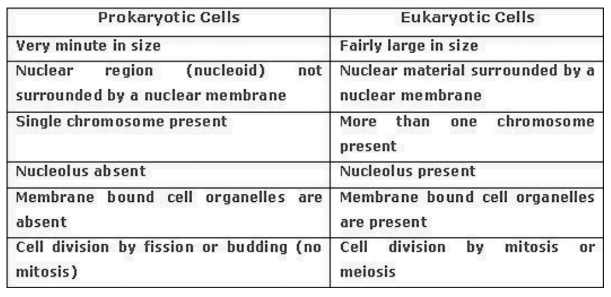
Cytoplasm:
The cytoplasm is the fluid content inside the plasma membrane. It is a jelly like viscous substance occupying entire cell except the nucleus. It also contains many specialized cell organelles that perform a specific function for the cell.
Cell organelles:
Cell organelles include endoplasmic reticulum, Ribosomes, Golgi apparatus, Mitochondria, Plastids, Lysosomes, and Vacuoles. They are important because they carry out some very crucial functions in cells.
Endoplasmic reticulum (ER):
The ER is a large network of membrane bound tubes and sheets. It serves as channels for the transport of materials especially proteins between various organs of the cytoplasm or between the cytoplasm and nucleus. It also functions as a cytoplasmic framework providing a surface for some of the biochemical activities of the cell. There are two types of ER- Rough endoplasmic reticulum and smooth endoplasmic reticulum.
RER: These are rough at surface and are associated with ribosomes. These are responsible for the synthesis of proteins. SER: These are smooth at surface and are not associated with ribosomes. It helps in the manufacture of fat molecules or lipids. It also plays a crucial role in detoxifying many poisons and drugs.
Membrane biogenesis: Some of the proteins and lipids synthesized by EF help in building the cell membrane. This process is known as membrane biogenesis.
Golgi Apparatus:
These cell organelles are named after the biologist, Camillo Golgi, who first described it. The Golgi consists of a stack of membrane-bound cisternae. These membranes often have connections with the membranes of ER and therefore constitute another portion of a complex cellular membrane system. Its functions include the storage, modification and packaging of products in vesicles. It is also involved in the formation of lysosomes.
Lysososmes:
Lysosomes are membranous sacs filled with enzymes. These enzymes are made by RER. They are a kind of waste disposal system of the cell. They help to keep the cell clean by digesting any foreign material as well as worn out cell organelles. Lysosomes contain hydrolytic enzymes which are capable of digesting cellular macromolecules. When the cell gets damaged, the lysosome may burst and its enzymes may digest thecell itself. Hence, lysosomes are called as
‘suicidal bags’.
Mitochondria:
These are cellular organelles termed as ‘power houses of the cells’. These are bounded by a double membrane. The outer membrane is smooth while the inner membrane is thrown into folds called as cristae. The cristae increase the area of cellular respiration. Mitochondria releases energy in the form of ATP molecules. ATP is known as the “energy currency of the cell”. Mitochondria have its own DNA DNA ribosomes and are able to make some of their own proteins.
Plastids:
Plastids are present only in plant cells. These are of two types- chromoplasts (coloured plastids) and leucoplasts (white or colourless plastids). Plastid contains pigment called chlorophyll are known as chloroplasts. These are important for photosynthesis in plants. Chromoplasts are the organelles which provide bright colours to the plant structures like buds, flowers etc.
Leucoplasts: are the organelles which store starch, oils and protein granules. Plastids consist of numerous
membrane layers embedded in a material called the stroma. Plastids also have their own DNA
and ribosomes.
Vacuoles: Vacuoles are membrane bound compartments present in both plant and animal cells. These are
storage sacs for solid or liquid contents. These are small sized in animal cells while bigger in plant cell. In plant cells vacuoles are full of sap and provide turgidity and rigidity to the cell. These organelles store water, waste products, and substances like amino acids, sugars and proteins. In some unicellular organisms specialized vacuoles also play important roles in expelling excess water and some wastes from the cell. Difference between plant cells and animal cells
Difference between Plant cells and Animal cells.

Topic Terminology
Term
Table:
.
Test Your Learning

Assign | Assess | Analyse
Objective Assessment
List Of Questions With Key, Aswers & Solutions
Back To Learn
Go Back To Learn Again
Mind Map Overal Idea Content Speed Notes Quick Coverage In most of the animals the blood that circulates in the body distributes food and oxygen to different cells of the body. It also carries waste products from different parts of the body for excretion. Circulatory system consists of the heart and blood vessels. In humans,… readmore
Overal Idea
Content
Quick Coverage
In most of the animals the blood that circulates in the body distributes food and oxygen to different cells of the body.
It also carries waste products from different parts of the body for excretion.
Circulatory system consists of the heart and blood vessels.
In humans, blood flows through arteries and veins and the heart acts as a pumping organ. (Scroll down till end of the page)
Audio, Visual & Digital Content
Blood is the fluid which flows in blood vessels.
It transport substance like digested food from the small intestine to the other parts of the body.
Blood consists of plasma, RBC, WBC and platelets.
Blood is red due to the presence of a red pigment, haemoglobin which binds with oxygen and transport oxygen to various parts.
Heart rate:The human heart beats about 70 to 80 times per minute in an adult person. This is called heart rate.
Arteries carry blood from the heart to all parts of the body.
Veins carry blood from all parts of the body back to the heart.
excretion: Removal of waste products from the body is called excretion.
Excretory system of humans consists of two kidneys, two ureters, a urinary bladder, and urethra.
Salts and urea are removed along with water as sweat.
Fish excrete waste substances such as ammonia which directly dissolve in water.
Birds, insects and lizard excrete uric acid in semi-solid form.
Transportation in plants :
Water and mineral nutrients are absorbed by roots from the soil.
xylem: Nutrients are transported along with water to the entire plant via the vascular tissue called xylem.
phloem: The vascular tissue for the transport of food to the various parts of the plant is phloem.
A lot of water is lost by plants in the form of vapour through stomata during transpiration.
Transpiration generates a force which pulls up water absorbed by the roots from the soil, to reach the stem and leaves.
Topic Terminology
Term
Table:
.
Test Your Learning
Mind Map Overal Idea Content Speed Notes Quick Coverage Similar Geometric Figures: Two geometric figures which are the same in shape, such that one is simply a copy of the other on a smaller scale or a larger scale, are called similar geometric figures. Two geometric figures are said to be similar if and only… readmore
Overal Idea
Content
Quick Coverage
Similar Geometric Figures:
Two geometric figures which are the same in shape, such that one is simply a copy of the other on a smaller scale or a larger scale, are called similar geometric figures.
Two geometric figures are said to be similar if and only if they have the same shape but not necessarily the same size. Two congruent geometric figures are always similar but converse may or may not be true. (Scroll down till end of the page)
Audio, Visual & Digital Content
Similar Polygons: Two polygons of the same number of sides are similar, if
(i) their corresponding angles are equal and
(ii) their corresponding sides are in proportion or their corresponding sides are in the same ratio.
The same ratio of the corresponding sides is referred to as the representative fraction or the scale factor for the polygons.
Similar Triangles :
Two triangles are said to be similar,
if (i) their corresponding angles are equal and
ii) their corresponding sides are in proportion (are in the same ratio).
Basic Proportionality Theorem (or Thales Theorem) : 1
If a line is drawn parallel to one side of a triangle intersecting the other two sides, then it divides the two sides in the same ratio. Or If a line is drawn parallel to one side of a triangle, intersecting the other two sides in distinct points, the other two sides are divided in the same ratio i .e.. If in ∆ABC, l∥ BC, intersecting in D and E. then

Converse of Basic Proportionality Theorem :

If a line divides any two sides of a triangle in the sameratio, the line is parallel to the third side i.e.
In ∆ABC, if l intersects AB in D and AC in E, such that:
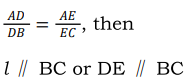
Criteria for Similarity of Triangles:
Two triangles are said to be similar, if
(i) their corresponding angles are equal and (ii) their corresponding sides are in proportion (or are in the same ratio).
2 (i) AA or AAA Similarity Criterion : If two angles of one triangle are equal to two corresponding angles of another triangle, then the triangles are similar. If two angles of one triangle are respectively equal to the two angles of another triangle, then the third angles of the two triangles are necessarily equal, because the sum of three angles of a triangle is always 180 0 .
(ii) SAS Similarity Criterion : If one angle of a triangle is equal to one angle of another triangle and the sides including these angles are in the same ratio, then the two triangles are similar. Or If two sides of a triangle are proportional to two corresponding sides of another triangle and the angles included between them are equal, then the triangles are similar.
iii) SSS Similarity Criterion : If in two triangles, sides of one triangle are proportional (or are in the same ratio) to the sides of the other triangle, then the triangles are similar. If ∆ABC~ ∆PQR by any one similarity criterion, then ∠A=∠P, ∠B=∠Q, ∠C=∠R and
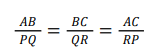
i.e., A and P, B and Q, C and R are the corresponding vertices, also AB and PQ. BC and QR. CA and RP are the corresponding sides. 3 Areas of Similar Triangles: The ratio of the areas of two similar triangles is equal to the square of the ratio of their corresponding sides. – The ratio of the areas of two similar triangles is equal to the square of the ratio of their corresponding medians. – The ratio of the areas of two similar triangles is equal to the ratio of the squares of their corresponding altitudes. – The ratio of the areas of two similar triangles is equal to the ratio of the squares of their corresponding angle bisectors. Pythagoras Theorem : In a right triangle, the square of the hypotenuse is equal to the sum of the squares of the other two sides. Converse of Pythagoras Theorem : In a triangle, if the square of one side is equal to the sum of the squares of the other two sides, then the angle opposite the first side is a right angle. If a perpendicular is drawn from the vertex of the right angle of a right triangle to the hypotenuse, the triangles on each side of the perpendicular are similar to the whole triangle and similar to each other i .e ..
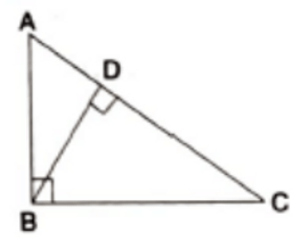
If in ∆ABC, ∠B=90^0 and BD ⊥ AC, then (i) ∆ADB ~ ∆ABC (ii) ∆BDC ~ ∆ABC (iii) ∆ADB ~ ∆BDC
Topic Terminology
Term
Table:
.
Test Your Learning
Mind Map Overal Idea Content Speed Notes Quick Coverage Biodiversity: Occurrence of innumerable types of organisms and the whole range of their varieties (biotypes) adapted to different climates, environments and areas. Wildlife sanctuary, national park and bio-sphere reserve are names given to the areas meant for conservation and preservation of forest and wild animals. (Scroll… readmore
Overal Idea
Content
Quick Coverage
Biodiversity: Occurrence of innumerable types of organisms and the whole range of their varieties (biotypes) adapted to different climates, environments and areas. Wildlife sanctuary, national park and bio-sphere reserve are names given to the areas meant for conservation and preservation of forest and wild animals. (Scroll down till end of the page)
Audio, Visual & Digital Content
Biodiversity refers to the variety of living organisms in a specific area.
Plants and animals of a particular area are known as the flora and fauna of that area.
Endemic species are found only in a particular area.
Endangered species are those which are facing the danger of extinction.
Red Data Book contains a record of endangered species.
Migration is the phenomenon of movement of a species from its own habitat to some other habitat for a particular time period every year for a specific purpose like breeding.
We should save, reuse and recycle paper to save trees, energy and water.
Reforestation is the restocking of destroyed forests by planting new trees.
Flora: Different types of plants belonging to an area.
Example: Silver ferns, sal, teak, mango, etc.
Fauna: All animals found in an area.
Example: dog, frog, insects, bull, jackal, etc.
Endemic Species: Species of plants and animals found exclusively in a particular area.
These are not naturally found anywhere else.
Extinct Species: Species of plants and animals which have already been lost.
Type of Threatened Species:
(ii) Vulnerable Species: A vulnerable species is a species of animals or plants which are likely to become endangered unless something changes.
Example: Chinkara deerand black buck, golden langur, etc
(iii) Rare Species: Species whose population are originally small and scattered in the National Parks: Protective areas reserved exclusively for the betterment of the wildlife. These are established at the approval of legislature.
Example: Hazaribagh National Park in Jharkhand, Desert National Park in Rajasthan.
Sanctuaries: Hunting prohibited areas set up by government are known as sanctuaries. These are only for the protection of wild animals.
Example: Jaldapara in Madarihat (West Bengal), Keoladeo Ghana in Bharatpur (Rajasthan)
igration: The regular, periodic, two way movements of birds and some animals from their place of residence to some other place along well defined routes. It is linked to seasonal factors, breeding, shortage of foods, etc.
The sanctuary is known for the migratory birds
Topic Terminology
Term
Table:
.
Test Your Learning
Assign | Assess | Analyse
Objective Assessment
List Of Questions With Key, Aswers & Solutions
Back To Learn
Go Back To Learn Again
Assign | Assess | Analyse
Objective Assessment
List Of Questions With Key, Aswers & Solutions
Back To Learn
Go Back To Learn Again
Mind Map Overal Idea Content Speed Notes Quick Coverage Cube number: Number obtained when a number is multiplied by itself three times. 23 = 2 x 2 x 2 = 8, 33 = 3 x 3 x 3=27, etc. Numbers like 1729, 4104, 13832, are known as Hardy – Ramanujan Numbers. They can be expressed… readmore
Overal Idea
Content
Quick Coverage
Cube number: Number obtained when a number is multiplied by itself three times. 23 = 2 x 2 x 2 = 8, 33 = 3 x 3 x 3=27, etc.
Numbers like 1729, 4104, 13832, are known as Hardy – Ramanujan Numbers. They
can be expressed as sum of two cubes in two different ways. (Scroll down till the end of the page).
Numbers obtained when a number is multiplied by itself three times are known as cube numbers. For example 1, 8, 27, … etc.
If in the prime factorisation of any number each factor appears three times, then the
number is a perfect cube.
The symbol
denotes cube root. For example
Perfect Cube: A natural number is said to be a perfect cube if it is the cube of some natural number. Example: 8 is perfect cube, because there is a natural number 2 such that 8 = 23, but 18 is not a perfect cube, because there is no natural number whose cube is 18.
The cube of a negative number is always negative.
Properties of Cube of Number:
ends in 3.
Topic Terminology
Term:
Topic Terminology
Term:
Test Your Learning