Mind Map Overal Idea Content Speed Notes Quick Coverage Humans become capable of reproduction after puberty. Puberty sets in between the ages of 11 years and 19 years. These children are called adolescents. The onset of puberty brings about growth of the reproductive organs. Hairs grow at various places on the body. Breasts develop in… readmore
Mind Map
Overal Idea
Content
Speed Notes
Quick Coverage
Humans become capable of reproduction after puberty. Puberty sets in between the ages of 11 years and 19 years. These children are called adolescents.
The onset of puberty brings about growth of the reproductive organs. Hairs grow at various places on the body.
Breasts develop in girls.
Facial hair (moustache and beard) appear in boys.
Voice of boys become hoarse as voice box enlarges during adolescence.
Children gain height during adolescence.
Puberty: It is the time when sex organs begin to work.
It brings about growth in reproductive organs and changes in the body.
Puberty starts at the beginning of adolescence. (Scroll down till end of the page)
Study Tools
Audio, Visual & Digital Content
Reaching the age of Adolescence
The onset of puberty starts much earlier in girls, between 8 and 13 years of age, whereas it starts between 10 and 14 years of age in boys and lasts upto 2 to 4 years.
Changes during Puberty: (i) Increase in Height: The bones of the legs and arms elongate and the individual becomes tall and lanky.
(ii) Changes in Body Shape: In boys, the body becomes more muscular, the shoulder becomes wider.
In girls, the body shows curves in certain parts and the region below the waist become wider and broader.
(iii) Change in Voice: In boys, the voice becomes hoarse and heavy due to the extra growth of larynx (voice box).
In girls, the voice becomes high pitched and shriller.
(iv) Sweat and sebaceous glands: They become more active and secrete more.
(v) Emotional aspects develop.
Periodic cycle of 28 days. The onset of puberty and maturity of reproductive parts are controlled by hormones.
Hormones are secretions of endocrine glands which pour them directly into the blood stream.
Pituitary gland secretes hormones which include growth hormone and hormones that make other glands such as the testes, ovaries, thyroids and adrenals, secrete hormones.
Pancreas secretes insulin, thyroid produces thyroxin and adrenals produce adrenalin.
Testosterone is the male hormone and estrogens, the female hormone.
The uterine wall in females prepares itself to receive the developing fertilised egg.
Menstruation: In case there isno fertilisation, the thickened lining of the uterine wall breaks down and goes out of the body along with blood.This is called menstruation.
Sperm and Ovum fuses together to form a zygote.
Sex chromosomes in sperms determine the baby’s gender. Humans have 23 pairs of chromosomes in each cell.
A pair of chromosome forms the sex chromosomes. Males carry XY and females carry XX chromosomes.
If a sperm carrying X fertilises the ovum with X chromosome, then the resulting baby is a girl.
If a sperm carrying Y chromosome fertilises the ovum with X chromosome, then the resulting baby is a boy.
Hence, males are responsible for the gender of the newly formed babies, Not Women.
Reproductive Health: It is important to eat balanced food and maintain personal hygiene during adolescence.
Cleaning of private parts is important to prevent possible infections.
The activity of sweat glands increases in puberty and releases bad odour from the body.
Thus frequent bathing is necessary. Physical exercise keeps the body fit and healthy as it releases lot of sweat.
Peer pressure is best addressed by self-confidence and a healthy lifestyle.
Mind Map Overal Idea Content Speed Notes Quick Coverage What are Living organisms made up of?All living organisms are made up of cells. Cell is the basic structural and functional unit of complex organisms. History of cell: Cells were first discovered by Robert Hooke in 1665 with the help of a primitive microscope. Leeuwenhoek, in… readmore
Mind Map
Overal Idea
Content
Speed Notes
Quick Coverage
What are Living organisms made up of? All living organisms are made up of cells. Cell is the basic structural and functional unit of complex organisms.
History of cell:
Cells were first discovered by Robert Hooke in 1665 with the help of a primitive microscope. Leeuwenhoek, in 1674, with the improved microscope, discovered free-living cells in pond water for the first time. (Scroll down till end of the page)
Study Tools
Audio, Visual & Digital Content
Robert Brown in 1831 discovered the nucleus in the cell.
Purkinje in 1839 coined the term ‘protoplasm‘ for the fluid part of the cell.
Schleiden in 1838 and Schwann in 1839 proposed the cell theory which stated that all plants and animals are composed of cells.
Rudolf Virchow in 1855 further expanded the cell theory by suggesting that all cells arise from pre-existing cells.
The invention of magnifying lenses led to the discovery of the microscopic world.
Unicellular organisms are the organisms in which a single cell performs all the functions like nutrition, respiration, excretion and reproduction.
Example: Amoeba, Chlamydomonas, Paramecium and Bacteria possess single cells constituting the whole organism. Multicellular organisms are the organisms which possess many cells to perform different functions.
Multicellular organisms represent themselves as a member of a group of cells or as an individual.
individual.
Example: Fungi, plants and animals have many cells that group together to form tissues.
Every multi cellular organism has come from a single cell. All cells thus come from pre existing cell.
Some organisms can also have cells of different kinds.
The shape and size of cell are related to the specific function they perform.
Some cells change their shapes.
Example: Amoeba. In some cases the cell shape could be more or less fixed and the peculiar for a particular type of cell.
Example: Nerve cells. Each living cell has the capacity to perform certain basic functions that are characteristic of all living forms.
There is a division of labour in multicellular organism such as human beings.
This means that different parts of the human body perform different functions.
Similarly division of labour is also seen within a single cell. In fact each such cell has got certain specific components within it known as cell organelles. Each kind of cell organelle performs a special function.
A cell is able to live and perform all its functions because of these organelles.
These organelles together constitute the basic unit called the cell. What is a cell made up of? What is the structural organization of a cell? Every cell would have three features- plasma membrane, nucleus and cytoplasm.
All activities inside the cell and interactions of the cell with its environment are possible due to these features. Plasma membrane or cell membrane: This is the outermost covering of the cell that separates the contents of the cell from its external environment. It is flexible and made up of organic molecules called lipids and proteins.
The flexibility of the cell membrane also enables the cell to engulf in food and other material from its external environment. Such processes are known as endocytosis.
Example: Amoeba It allows the movement of some substances into and out of the cell.
It also prevents movement of some other materials.
Therefore it is called a selectively permeable membrane. Movement of substances through this semi-permeable membrane can be by the process of diffusion, osmosis etc.
Difference between diffusion and osmosis
If we put an animal cell or a plant cell into a hypotonic solution the cell is likely to swell up.
The cell will stay in the same size if it kept it in isotonic solution.
If the solution is hypertonic then the cell will shrink. Unicellular fresh water organism and most plants tend to gain water through osmosis.
Cell wall: It is present only in plant cells. The cell wall is composed of cellulose and is permeable. It separates the contents of the cell from the surroundings. It gives shape and protection to the cell. Cell walls permit the cells of plants, fungi and bacteria to withstand very dilute external media without bursting.
Plasmolysis: It is the process in which cells lose water in a hypertonic solution.
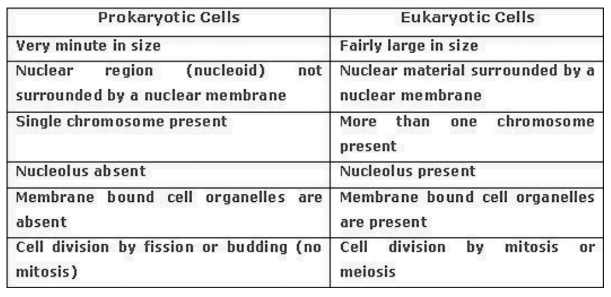
Nucleus: The nucleus has a double layered covering called nuclear membrane. The nuclear membrane has pores which allow the transfer of material from inside to outside. The nucleus contains chromosomes which are composed of Deoxyribonucleic acid (DNA) and proteins. Nucleus controls all the activities of the cell. As the nucleus carries genetic information in the form of DNA, it plays a major role in cell division and cell development. The functional segments of DNA are called genes. Nucleus plays an important role in protein synthesis and transmission of characters from one generation to another generation. It plays a central role in cellular reproduction. In some organisms nuclear membrane is absent and nuclear region contains only nucleic acids called nucleoid. Such organisms called prokaryotes. Eg. Bacteria. are called eukaryotes. Organisms with cells having a nuclear membrane
Cytoplasm:
The cytoplasm is the fluid content inside the plasma membrane. It is a jelly like viscous substance occupying entire cell except the nucleus. It also contains many specialized cell organelles that perform a specific function for the cell.
Cell organelles: Cell organelles include endoplasmic reticulum, Ribosomes, Golgi apparatus, Mitochondria, Plastids, Lysosomes, and Vacuoles. They are important because they carry out some very crucial functions in cells.
Endoplasmic reticulum (ER): The ER is a large network of membrane bound tubes and sheets. It serves as channels for the transport of materials especially proteins between various organs of the cytoplasm or between the cytoplasm and nucleus. It also functions as a cytoplasmic framework providing a surface for some of the biochemical activities of the cell. There are two types of ER- Rough endoplasmic reticulum and smooth endoplasmic reticulum.
RER: These are rough at surface and are associated with ribosomes. These are responsible for the synthesis of proteins. SER: These are smooth at surface and are not associated with ribosomes. It helps in the manufacture of fat molecules or lipids. It also plays a crucial role in detoxifying many poisons and drugs.
Membrane biogenesis: Some of the proteins and lipids synthesized by EF help in building the cell membrane. This process is known as membrane biogenesis.
Golgi Apparatus: These cell organelles are named after the biologist, Camillo Golgi, who first described it. The Golgi consists of a stack of membrane-bound cisternae. These membranes often have connections with the membranes of ER and therefore constitute another portion of a complex cellular membrane system. Its functions include the storage, modification and packaging of products in vesicles. It is also involved in the formation of lysosomes.
Lysososmes: Lysosomes are membranous sacs filled with enzymes. These enzymes are made by RER. They are a kind of waste disposal system of the cell. They help to keep the cell clean by digesting any foreign material as well as worn out cell organelles. Lysosomes contain hydrolytic enzymes which are capable of digesting cellular macromolecules. When the cell gets damaged, the lysosome may burst and its enzymes may digest thecell itself. Hence, lysosomes are called as ‘suicidal bags’.
Mitochondria: These are cellular organelles termed as ‘power houses of the cells’. These are bounded by a double membrane. The outer membrane is smooth while the inner membrane is thrown into folds called as cristae. The cristae increase the area of cellular respiration. Mitochondria releases energy in the form of ATP molecules. ATP is known as the “energy currency of the cell”. Mitochondria have its own DNA DNA ribosomes and are able to make some of their own proteins.
Plastids:
Plastids are present only in plant cells. These are of two types- chromoplasts (coloured plastids) and leucoplasts (white or colourless plastids). Plastid contains pigment called chlorophyll are known as chloroplasts. These are important for photosynthesis in plants. Chromoplasts are the organelles which provide bright colours to the plant structures like buds, flowers etc.
Leucoplasts: are the organelles which store starch, oils and protein granules. Plastids consist of numerous membrane layers embedded in a material called the stroma. Plastids also have their own DNA and ribosomes.
Vacuoles: Vacuoles are membrane bound compartments present in both plant and animal cells. These are storage sacs for solid or liquid contents. These are small sized in animal cells while bigger in plant cell. In plant cells vacuoles are full of sap and provide turgidity and rigidity to the cell. These organelles store water, waste products, and substances like amino acids, sugars and proteins. In some unicellular organisms specialized vacuoles also play important roles in expelling excess water and some wastes from the cell. Difference between plant cells and animal cells
Mind Map Overal Idea Content Speed Notes Quick Coverage In most of the animals the blood that circulates in the body distributes food and oxygen to different cells of the body. It also carries waste products from different parts of the body for excretion. Circulatory system consists of the heart and blood vessels. In humans,… readmore
Mind Map
Overal Idea
Content
Speed Notes
Quick Coverage
In most of the animals the blood that circulates in the body distributes food and oxygen to different cells of the body.
It also carries waste products from different parts of the body for excretion.
Circulatory system consists of the heart and blood vessels.
In humans, blood flows through arteries and veins and the heart acts as a pumping organ. (Scroll down till end of the page)
Study Tools
Audio, Visual & Digital Content
Blood is the fluid which flows in blood vessels.
It transport substance like digested food from the small intestine to the other parts of the body.
Blood consists of plasma, RBC, WBC and platelets.
Blood is red due to the presence of a red pigment, haemoglobin which binds with oxygen and transport oxygen to various parts.
Heart rate:The human heart beats about 70 to 80 times per minute in an adult person. This is called heart rate.
Arteries carry blood from the heart to all parts of the body.
Veins carry blood from all parts of the body back to the heart.
excretion: Removal of waste products from the body is called excretion.
Excretory system of humans consists of two kidneys, two ureters, a urinary bladder, and urethra.
Salts and urea are removed along with water as sweat.
Fish excrete waste substances such as ammonia which directly dissolve in water.
Birds, insects and lizard excrete uric acid in semi-solid form.
Transportation in plants :
Water and mineral nutrients are absorbed by roots from the soil.
xylem: Nutrients are transported along with water to the entire plant via the vascular tissue called xylem.
phloem: The vascular tissue for the transport of food to the various parts of the plant is phloem.
A lot of water is lost by plants in the form of vapour through stomata during transpiration.
Transpiration generates a force which pulls up water absorbed by the roots from the soil, to reach the stem and leaves.
Mind Map Overal Idea Content Speed Notes Quick Coverage Similar Geometric Figures: Two geometric figures which are the same in shape, such that one is simply a copy of the other on a smaller scale or a larger scale, are called similar geometric figures. Two geometric figures are said to be similar if and only… readmore
Mind Map
Overal Idea
Content
Speed Notes
Quick Coverage
Similar Geometric Figures:
Two geometric figures which are the same in shape, such that one is simply a copy of the other on a smaller scale or a larger scale, are called similar geometric figures.
Two geometric figures are said to be similar if and only if they have the same shape but not necessarily the same size. Two congruent geometric figures are always similar but converse may or may not be true. (Scroll down till end of the page)
Study Tools
Audio, Visual & Digital Content
Similar Polygons: Two polygons of the same number of sides are similar, if
(i) their corresponding angles are equal and
(ii) their corresponding sides are in proportion or their corresponding sides are in the same ratio.
The same ratio of the corresponding sides is referred to as the representative fraction or the scale factor for the polygons.
Similar Triangles :
Two triangles are said to be similar,
if (i) their corresponding angles are equal and
ii) their corresponding sides are in proportion (are in the same ratio).
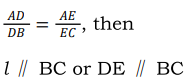
If a line is drawn parallel to one side of a triangle intersecting the other two sides, then it divides the two sides in the same ratio. Or If a line is drawn parallel to one side of a triangle, intersecting the other two sides in distinct points, the other two sides are divided in the same ratio i .e.. If in ∆ABC, l∥ BC, intersecting in D and E. then
Converse of Basic Proportionality Theorem :
If a line divides any two sides of a triangle in the sameratio, the line is parallel to the third side i.e.
In ∆ABC, if l intersects AB in D and AC in E, such that:
Criteria for Similarity of Triangles:
Two triangles are said to be similar, if
(i) their corresponding angles are equal and (ii) their corresponding sides are in proportion (or are in the same ratio).
2 (i) AA or AAA Similarity Criterion : If two angles of one triangle are equal to two corresponding angles of another triangle, then the triangles are similar. If two angles of one triangle are respectively equal to the two angles of another triangle, then the third angles of the two triangles are necessarily equal, because the sum of three angles of a triangle is always 180 0 .
(ii) SAS Similarity Criterion : If one angle of a triangle is equal to one angle of another triangle and the sides including these angles are in the same ratio, then the two triangles are similar. Or If two sides of a triangle are proportional to two corresponding sides of another triangle and the angles included between them are equal, then the triangles are similar.
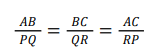
iii) SSS Similarity Criterion : If in two triangles, sides of one triangle are proportional (or are in the same ratio) to the sides of the other triangle, then the triangles are similar. If ∆ABC~ ∆PQR by any one similarity criterion, then ∠A=∠P, ∠B=∠Q, ∠C=∠R and
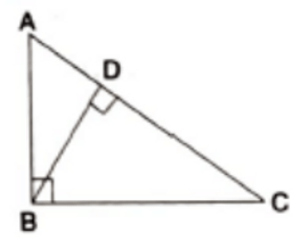
i.e., A and P, B and Q, C and R are the corresponding vertices, also AB and PQ. BC and QR. CA and RP are the corresponding sides. 3 Areas of Similar Triangles: The ratio of the areas of two similar triangles is equal to the square of the ratio of their corresponding sides. – The ratio of the areas of two similar triangles is equal to the square of the ratio of their corresponding medians. – The ratio of the areas of two similar triangles is equal to the ratio of the squares of their corresponding altitudes. – The ratio of the areas of two similar triangles is equal to the ratio of the squares of their corresponding angle bisectors. Pythagoras Theorem : In a right triangle, the square of the hypotenuse is equal to the sum of the squares of the other two sides. Converse of Pythagoras Theorem : In a triangle, if the square of one side is equal to the sum of the squares of the other two sides, then the angle opposite the first side is a right angle. If a perpendicular is drawn from the vertex of the right angle of a right triangle to the hypotenuse, the triangles on each side of the perpendicular are similar to the whole triangle and similar to each other i .e ..
If in ∆ABC, ∠B=90^0 and BD ⊥ AC, then (i) ∆ADB ~ ∆ABC (ii) ∆BDC ~ ∆ABC (iii) ∆ADB ~ ∆BDC
Mind Map Overal Idea Content Speed Notes Quick Coverage Biodiversity: Occurrence of innumerable types of organisms and the whole range of their varieties (biotypes) adapted to different climates, environments and areas. Wildlife sanctuary, national park and bio-sphere reserve are names given to the areas meant for conservation and preservation of forest and wild animals. (Scroll… readmore
Mind Map
Overal Idea
Content
Speed Notes
Quick Coverage
Biodiversity: Occurrence of innumerable types of organisms and the whole range of their varieties (biotypes) adapted to different climates, environments and areas. Wildlife sanctuary, national park and bio-sphere reserve are names given to the areas meant for conservation and preservation of forest and wild animals. (Scroll down till end of the page)
Study Tools
Audio, Visual & Digital Content
Biodiversity refers to the variety of living organisms in a specific area.
Plants and animals of a particular area are known as the flora and fauna of that area.
Endemic species are found only in a particular area.
Endangered species are those which are facing the danger of extinction.
Red Data Book contains a record of endangered species.
Migration is the phenomenon of movement of a species from its own habitat to some other habitat for a particular time period every year for a specific purpose like breeding.
We should save, reuse and recycle paper to save trees, energy and water.
Reforestation is the restocking of destroyed forests by planting new trees.
Flora: Different types of plants belonging to an area.
Example: Silver ferns, sal, teak, mango, etc.
Fauna: All animals found in an area.
Example: dog, frog, insects, bull, jackal, etc.
Endemic Species: Species of plants and animals found exclusively in a particular area.
These are not naturally found anywhere else.
Extinct Species: Species of plants and animals which have already been lost.
Type of Threatened Species:
(ii) Vulnerable Species: A vulnerable species is a species of animals or plants which are likely to become endangered unless something changes.
Example: Chinkara deerand black buck, golden langur, etc (iii) Rare Species: Species whose population are originally small and scattered in the National Parks: Protective areas reserved exclusively for the betterment of the wildlife. These are established at the approval of legislature.
Example: Hazaribagh National Park in Jharkhand, Desert National Park in Rajasthan.
Sanctuaries: Hunting prohibited areas set up by government are known as sanctuaries. These are only for the protection of wild animals.
Example: Jaldapara in Madarihat (West Bengal), Keoladeo Ghana in Bharatpur (Rajasthan) igration: The regular, periodic, two way movements of birds and some animals from their place of residence to some other place along well defined routes. It is linked to seasonal factors, breeding, shortage of foods, etc.
Mind Map Overal Idea Content Speed Notes Quick Coverage Cube number: Number obtained when a number is multiplied by itself three times. 23 = 2 x 2 x 2 = 8, 33 = 3 x 3 x 3=27, etc. Numbers like 1729, 4104, 13832, are known as Hardy – Ramanujan Numbers. They can be expressed… readmore
Mind Map
Overal Idea
Content
Speed Notes
Quick Coverage
Cube number: Number obtained when a number is multiplied by itself three times. 23 = 2 x 2 x 2 = 8, 33 = 3 x 3 x 3=27, etc.
Numbers like 1729, 4104, 13832, are known as Hardy – Ramanujan Numbers. They
can be expressed as sum of two cubes in two different ways. (Scroll down till the end of the page).
Study Tools
Numbers obtained when a number is multiplied by itself three times are known as cube numbers. For example 1, 8, 27, … etc.
If in the prime factorisation of any number each factor appears three times, then the
number is a perfect cube.
The symbol
denotes cube root. For example
Perfect Cube: A natural number is said to be a perfect cube if it is the cube of some natural number. Example: 8 is perfect cube, because there is a natural number 2 such that 8 = 23, but 18 is not a perfect cube, because there is no natural number whose cube is 18.
The cube of a negative number is always negative.
Properties of Cube of Number:
Cubes of even number are even.
Cubes of odd numbers are odd.
The sum of the cubes of first n natural numbers is equal to the square of their sum.
Cubes of the numbers ending with the digits 0, 1, 4, 5, 6 and 9 end with digits 0, 1, 4, 5, 6 and 9 respectively.
Cube of the number ending in 2 ends in 8 and cube of the number ending in 8 ends in 2.
Cube of the number ending in 3 ends in 7 and cube of the number ending in 7
Mind Map Overal Idea Content Speed Notes Quick Coverage Content : (Scroll down till end of the page) Study Tools Audio, Visual & Digital Content Content … Key Terms Topic Terminology Term Important Tables Table: . Assessments Test Your Learning readmore
Mind Map Overal Idea Content Speed Notes Quick Coverage Biology is the study of living things. All living things are called organisms, both plants and animals are living organisms. But how we decide whether something is living or non-living depends on 7 lifeprocesses. If something is living it will carryout the 7 life processes below.… readmore
Mind Map
Overal Idea
Content
Speed Notes
Quick Coverage
Biology is the study of living things. All living things are called organisms, both plants and animals are living organisms. But how we decide whether something is living or non-living depends on 7 lifeprocesses. If something is living it will carryout the 7 life processes below. (Scroll down till end ..)
Content
Study Tools
Audio, Visual & Digital Content
What are life processes?
Biology is the study of living things. All living things are called organisms, both plants and animals are living organisms. But how we decide whether something is living or non-living depends on 7 lifeprocesses. If something is living it will carryout the 7 life processes below.
1.Movement Both animals and plants have the ability to move. Plants are rooted and move slowly as theygrow. Their roots move down into the soil and their stems moveup towards thelight. Animals onthe other handmove quickly andcan move their entire bodies. They canmove in search of food, shelter or to avoiddanger.
2.Respiration Respiration is theprocess of extracting energy out ofthe food weeat. All living things respire because they need energy to grow, to replace worn out parts and to move. Respiration takes placein the mitochondria of the cell.
3.Sensitivity All living organisms are sensitive; this means that they have anawareness of changes in their environment. Animals respond quickly to stimuli such as heat, light, sound, touch and chemicals which have taste and smell. On the other hand, plants generally appear less sensitive and their response is slower.
4.Growth All living organisms grow. Plants continue growing throughout their lives. Animals stop growing once they reach adulthood. Even when growth stops, materials within an animal’s body arestill being replaced from its food.
5.Excretion All living things make waste products these can beuseless or harmful to it and therefore need to be got rid of. Excretion is the process of getting rid of metabolic waste. Plants store waste substances in their leaves, the waste is removed when their leaves fall off. Animals breathe out waste carbon dioxide, otherwaste substances leavethe body in urineand sweat. Note: Getting rid offaeces or undigested food is notexcretion but egestion.
6.Reproduction All living things must produce offspring like themselves in order for their species to survive. This is the process known as reproduction. Plants produce seeds that give rise to new plants of thesame species. Animals lay eggs orhave babies. Reproduction can be of two types,
Sexual which involves two parents andthe union oftwo gametes andAsexual where oneparent can reproduce itself.
7.Nutrition Nutrition is needed for energy and growth, both plants andanimals need food.Plants are ableto make their own food by photosynthesis. They use sunlight to turn simple molecules like carbon dioxide and water into more complex carbohydrate molecules. Animals are unable to make theirown food sorely on other plants and other animals for their nutrition. Animals takein complex substances and break themdown into small,simple, soluble molecules whichcan be used for energy and growth
Nutrition: Energy required to carry out different life processes is obtained through the process of nutrition.Depending on themode of obtaining nutrition, organisms areclassified as autotrophs or heterotrophs. i. Autotrophs can prepare theirown food from simple inorganic sources such as carbon dioxide and water. Examples: Green plants and somebacteria. ii. Heterotrophs cannot synthesise their own food and are dependent on other organisms for obtaining complex organic substances for nutrition. Example: Animals and fungi
Autotrophic Nutrition: A type of nutrition in which organisms synthesize the organic materials they require frominorganic sources. Chiefsources of carbon and nitrogen arecarbon dioxide andnitrates, respectively. All green plants are autotrophic and use light as a source of energy for the synthesis of foodthrough photosynthesis.
The following events occur during this process. (i) Absorption oflight energy bychlorophyll (ii) Conversion of light energy to chemical energy and splitting of water molecules into hydrogen andoxygen. (iii) Reduction ofcarbon dioxide tocarbohydrates.
These greenplants absorbs waterfrom the soil by roots.Co2 enters fromthe atmosphere through stomata, Sunlight is absorbed by chlorophyll andother green parts of the plants.
Heterotrophic Nutrition: All heterotrophs depend on autotrophs fortheir nutrition. Thethree main typesof heterotrophic nutrition are:
1. Holozoic nutrition: Complex foodis taken intoa specialist digestive system and broken down into smallpieces to be absorbed. Eg: Ameoba, Humans 2. Saprophytic nutrition: Organisms feed ondead organic remains of other organisms. Eg: Fungi like bread moulds yeast andmushrooms.
Parasitic nutrition: Organisms obtain food fromother living organisms (the host), withthe host receiving no benefit fromthe parasite. Eg:cascuta, ticks, lice,leeches and tapeworms.
3. How doOrganisms Obtain Their Utrition?
In single celled organisms, the foodmay be taken in bythe entire surface. Eg: Amoeba takes in food using temporary finger-like extensions of the cell surface which fuseover the food particle forming a food-vacuole. Inside the food vacuole, complex substances are broken down into simpler ones which then diffuse into the cytoplasm. The remaining undigested material is moved to the surface of the cell andthrown out.
Nutrition in Human Beings: In humans, digestion of food takesplace in the alimentary canal, made up of various organsand glands.
In the mouth,food is crushed into small particles through chewing and mixedwith saliva, which contains amylase for digesting starch.
On swallowing, foodpasses through the pharynx and oesophagus to reach thestomach. Gastric juice contains pepsin (for digesting proteins), HCl and mucus.
The hydrochloric acidcreates an acidic medium which facilitates the action of the enzyme pepsin. The mucus protects the inner lining of the stomach from the action of the acid under normal conditions. From the stomach, the food now enters the small intestine. The small intestine is the siteof the complete digestion ofcarbohydrates, proteins and fats.
The liver secretes bilewhich emulsifies fat. The pancreas secretes pancreatic juice which contains the enzymes amylase, trypsin andlipase for digesting starch, proteins and fats, respectively. In the small intestine, carbohydrates, proteins and fats arecompletely digested intoglucose, aminoacids, fattyacids and glycerol. The villi of the small intestine absorb the digested foodand supply it to every cellof the body. The unabsorbed foodis sent intothe large intestine where more villi absorb water fromthis material. The rest of the material is removed fromthe body via the anus.
Respiration: During respiration, the digested foodmaterials are brokendown to release energy in the form of ATP. Depending on the requirement of oxygen, respiration maybe of twotypes:
i. Aerobic respiration: It occurs in the presence of air (oxygen).
ii. Anaerobic respiration: It occurs in the absence of (air) oxygen.
In all cases the first step is the break-down of glucose, a six-carbon molecule, into a three-caron molecule called pyruvate. This process taken place in thecytoplasm. Further, thepyruvate may beconverted into ethanol and carbon dioxide. This process takes place in yeast during fermentation. Since this process takes place in the absence of air (oxygen), it is called anaerobic respiration. Break-down ofpyruvate using oxygen takes place in the mitochondria. A large amount of energy isreleased in aerobic respiration as compared to anaerobic respiration. Some times when there is a lack of oxygen in our muscle cells, the pyruvate is converted into lactic acid. This build up of lactic acid in ourmuscles during sudden activity causes cramps.
Terrestrial organisms useatmospheric oxygen forrespiration, whereas aquatic organisms use oxygen dissolved in water.
In humans, inhalation of air occurs through the following pathway: Nostrils_ Nasal passage _ Pharynx _ Larynx _ Trachea _ Bronchus _ Bronchiole _ Alveolus (please put arrow marks——- à)
In human beings are is taken into the body through the nostrils. The air passing through the nostrils is filtered by fine hairs that line the passage. The passage is also lined with mucus which helps in this process. Fromhere, the air passes through the throat and into thelungs. Rings ofcartilage are present in the throat. These ensure that the air-passage does not collapse. Within the lungs the passage divides into smaller and smaller tubes which finally terminate in balloon-line structures which are called alveoli. The alveoli of lungs are richly supplied with blood and are the sites where exchange of gases (O2 and CO2) occurs between blood and the atmosphere. The blood brings carbon dioxide from the rest of the body for release into the alveoli, and the oxygen in the alveolar air is taken upby blood inthe alveolar blood vessels to be transported to all
the cells inthe body. During the breathing cycle, when air is taken in and let out,the lungs always contain a residual volume of air so that there is sufficient time for oxygen to be absorbed and for the carbon dioxide to be released. In humans, the respiratory pigment haemoglobin carries oxygen from the lungs to the different tissues of the body.This pigment in present in the redblood cells.
Transportation:
Transportation in Human Beings: The circulatory system is composed of the heart, blood and blood vessels which transport various materials throughout the body.
The heart:
The human heart has four chambers—two atria (right and left) and two ventricles (right and left). These chambers prevent the oxygen rich blood from mixing with the blood containing carbon dioxide. The right half of the heart receives deoxygenated blood, whereas the left half receives oxygenated blood.
The carbon dioxide –rich blood has to reach the lungs for the carbon dioxide to be removed, and the oxygenated blood from the lungs has to be brought back to the heart. This oxygen-rich blood isthen pumped to the restof the body. Ventricular walls are much thicker than atrial walls. Humans show double circulation i.e. blood goes through the heart twice and complete separation of oxygenated and deoxygenated blood. Arteries carry blood from the heart to different parts of the body, whereas veins deliver the blood back to the heart. Arteries are connected to veins by thin capillaries, wherein materials are exchanged between the bloodand cells. Blood has platelet cells which circulates around the body and prevent the blood loss at the site of injury. Lymph is also involved in transportation. It is similar to the plasma of blood but colourless and contains less protein. It drains into lymphatic capillaries from the intercellular spaces which join tofrom large lymph vessels that finally open intolarger veins. It carries digested and absorbed fat from intestine and drains excess fluid from extra cellular space back into the blood.
Transportation in plants: Plant transport systems will move energy stores from leaves and raw materials from roots. These two pathways are constructed as independently organized conducting tubes. One, the xylemmoves waterand minerals obtained from the soil.The other, phloem transports products ofphotosynthesis from the leaves where they are synthesised to other partsof the plant. The component of xylem tissue (tracheids and vessesls) of roots, stems, leaves are interconnected to form a continuous system of water conducting channels that reaches all parts of the plant. Transpiration creates a suction pressure, as a result of which water is forced into the xylem cells of the roots. Then there is a steady movement of water fromthe root xylem to all partsof the plant parts through theinterconnected water conducting channels. The loss ofwater in theform of vapour from the aerial parts of theplant is known as transpiration.
Thus it helps in the absorption and upward movement of water and minerals dissolved in it from rootsto the leaves. It also regulates temperature.
The transport of soluble products of photosynthesis is called translocation and itoccurs in phloem. It transports amino acids and other substances. The translocation of food and other substancestakes place in the sieve tubes with the help of adjacent companion cells both in upward and down ward directions. The translocation in phloem is achieved by utilising energy. Material like sucrose is transferred into phloem tissue using energy from ATP. This increases the osmotic pressure of the tissue causing water to move into it. This pressure. This allows the phloem to move material according to the plant’s needs. For example, in the spring, sugar stored in root or stem tissue would be transported to the buds which need energy to grow.
Excretion: During excretion, theharmful metabolic nitrogenous wastes generated areremoved from thebody
Excretion in Human Beings:
In humans, a pair of kidneys, a pair of ureters, the urinary bladder and the urethra constitute the excretory system. Kidneys are located in the addomen, one on either side of the backbone. Urine produced inthe kidneys passes through the ureters into the urinary bladder where it is stored until it is released through the urethra. Each kidney has large numbers of basic filtration units called nephrons. Some substances in the initial filtrate, such as glucose, amino acids, salts and a major amount of water, are selectively re-absorbed as the urine flows along the tube. The amount of water re-absorbed depends on how muchexcess water there is in the body, and on how muchof dissolved wastethere is tobe excreted. The urine forming in each kidney eventually enters a long tube, the ureter, which connects the kidneys with the urinary bladder until the pressure of the expanded bladder leads to the urge to pass it out through the urethra. The bladder is muscular so it is under nervous control. As a result wecan control theurge to urinate.
Excretion in plants: Plants do nothave an excretory system and carryout excretion in various wayssuch as transpiration, releasing wastes into the surrounding soil, losing their leaves and storing waste materials in cell vacuoles. Other waste products arestored as resins and gums in oldxylem.
Use the below buttons to explore our free services to find more…
Mind Map Overal Idea Content Speed Notes Quick Coverage Content : (Scroll down till end of the page) Study Tools Audio, Visual & Digital Content Content … Key Terms Topic Terminology Term Important Tables Table: . Assessments Test Your Learning readmore