No Matter Where You Start Among Study, Assess & Interact. But Your Course Will Be Completed Successfully.
Welcome to The Right Mentor, your trusted source for exam preparation. In this article, we provide comprehensive notes on the functions of the Indian political system, designed to help you succeed in your Telangana TGT jobs exam. Gain a deep understanding of the roles and responsibilities of the Executive, Legislative, and Judicial branches of the Indian political system. Read on to discover our valuable notes and prepare with confidence for your exam.,
Indian Political System – Functions
Notes on the functions of Indian political system to help you excel in Competitive exams.
Familiarize yourself with the Indian political system and its core principles. Understand the foundational aspects of democracy, secularism, federalism, and social justice that shape the Indian Constitution. Gain insights into the historical background and the evolution of the Indian political system, including the framing of the Constitution.
Functions of the Executive Branch
Explore the functions of the Executive branch in the Indian political system. Learn about the roles and responsibilities of the President, who is the head of state, and the Prime Minister, who is the head of government. Understand how the Council of Ministers assists in the execution and administration of government policies.
Functions of the Legislative Branch
Delve into the functions of the Legislative branch in the Indian political system. Learn about the roles and responsibilities of the Parliament, which consists of the Rajya Sabha (Council of States) and the Lok Sabha (House of the People). Understand how laws are made, amended, and repealed through the legislative process.
Functions of the Judicial Branch
Understand the functions of the Judicial branch in the Indian political system. Explore the role of the Supreme Court as the highest court of the land. Learn about the judiciary’s responsibility in upholding the Constitution, interpreting laws, and safeguarding the rights and freedoms of citizens.
Checks and Balances in the Indian Political System
Discover the significance of checks and balances in the Indian political system. Understand how the Executive, Legislative, and Judicial branches work together to ensure accountability and prevent the concentration of power. Explore the role of independent institutions, such as the Election Commission and the Comptroller and Auditor General, in maintaining the democratic fabric of the country.
Conclusion: Prepare effectively for your Telangana TGT jobs exam with our comprehensive notes on the functions of the Indian political system. Gain a thorough understanding of the roles and responsibilities of the Executive, Legislative, and Judicial branches to excel in your exam. Visit The Right Mentor for more valuable exam preparation resources and confidently prepare for success.
The Constitution of India is the supreme law of the land and provides the framework for the functioning of the political system.
No Matter Where You Start Among Study, Assess & Interact. But Your Course Will Be Completed Successfully.
Welcome to The Right Mentor, your trusted source for educational insights. In this article, we delve into the transformative role of artificial intelligence (AI) in school education. Discover how AI is reshaping traditional classrooms, providing personalized learning experiences, and revolutionizing teaching methods. Read on to explore the incredible potential of AI in education and its impact on student engagement and academic outcomes.
Welcome to The Right Mentor, your trusted source for exam preparation. In this article, we provide valuable notes on the Indian political system to help you excel in your Telangana TGT jobs exam. Gain a deep understanding of the structure, functions, and key features of the Indian political system, ensuring success in your exam. Read on to discover our comprehensive notes and ace your exam with confidence.
Federal System
India follows a federal system of government where power is divided between the central government and the state governments. This division of power ensures a balance between the central authority and regional autonomy.
Parliamentary Democracy
India has a parliamentary form of government where the President is the head of state and the Prime Minister is the head of government. The Parliament consists of the President, the Rajya Sabha (Council of States), and the Lok Sabha (House of the People).
Written Constitution
India has a written constitution that lays down the fundamental rights, principles, and structure of the government. The Constitution of India is one of the lengthiest and most comprehensive constitutions in the world.
Fundamental Rights
The Indian Constitution guarantees fundamental rights to its citizens, such as the right to equality, freedom of speech and expression, and the right to protection of life and personal liberty. These rights are enforceable by the judiciary.
Independent Judiciary
The Indian political system has an independent judiciary that acts as the guardian of the Constitution and ensures the rule of law. The Supreme Court is the highest judicial authority in the country.
Universal Adult Suffrage
India follows the principle of universal adult suffrage, where every citizen above the age of 18 has the right to vote. Elections are held periodically at the national, state, and local levels to elect representatives to the Parliament and state legislatures.
Secularism
India is a secular country, which means that the state does not promote or favor any particular religion. It guarantees freedom of religion and ensures equal treatment of all religions.
Multi-Party System
India has a multi-party system where multiple political parties compete in elections. The diversity of political parties allows for a wide range of representation and promotes democratic participation.
Independent Election Commission
The Election Commission of India is an autonomous body responsible for conducting free and fair elections in the country. It ensures the integrity of the electoral process and regulates political parties.
Reserved Seats
The Indian political system includes reserved seats for scheduled castes and scheduled tribes in the Parliament and state legislatures to ensure representation and participation of marginalized communities.
Understanding the key features of the Indian political system is essential for a comprehensive understanding of the country’s governance structure and democratic processes. These features reflect the principles of federalism, democracy, rule of law, and inclusivity that form the foundation of the Indian political system.
Prepare effectively for your Telangana TGT jobs exam with our comprehensive notes on the Indian political system. Gain a solid understanding of the structure, functions, and key features of the Indian political system to excel in your exam. Visit The Right Mentor for more valuable exam preparation resources and stay ahead in your journey towards success.
Find All Listed Educational Tools At One Place For Teaching And Learning .
No Matter Where You Start Among Study, Assess & Interact. But Your Course Will Be Completed Successfully.
Click here
Study Tools
Study Tools
[sharer_to_google] Assessment Tools
Lorem ipsum dolor sit amet, consectetur adipiscing elit. Ut elit tellus, luctus nec ullamcorper mattis, pulvinar dapibus leo. Interact Tools
Accordion Content
Lorem ipsum dolor sit amet, consectetur adipisicing elit. Optio, neque qui velit. Magni dolorum quidem ipsam eligendi, totam, facilis laudantium cum accusamus ullam voluptatibus commodi numquam, error, est. Ea, consequatur.
Accordion Tab Title 2
Lorem ipsum dolor sit amet, consectetur adipisicing elit. Optio, neque qui velit. Magni dolorum quidem ipsam eligendi, totam, facilis laudantium cum accusamus ullam voluptatibus commodi numquam, error, est. Ea, consequatur.
Accordion Tab Title 3
Lorem ipsum dolor sit amet, consectetur adipisicing elit. Optio, neque qui velit. Magni dolorum quidem ipsam eligendi, totam, facilis laudantium cum accusamus ullam voluptatibus commodi numquam, error, est. Ea, consequatur.
No Matter Where You Start. StudyTools, Assessment Tools and Interact Tools Are The Educational Tools (E – Tools). They are Interconnected To Complete Your Course.
No Matter Where You Start. StudyTools, Assessment Tools and Interact Tools Are The Educational Tools (E – Tools). They are Interconnected To Complete Your Course.
Axiom 1: If a rays stands on a line , then the sum of two adjacent angles so formed is 180 0
Axiom 6.2 : If the sum of two adjacent angles is 180°, then the non-common arms of the angles form a line.
Theorem 6.1 : If two lines intersect each other, then the vertically opposite angles are equal.
Axiom 6.3 : If a transversal intersects two parallel lines, then each pair of corresponding angles is equal.
Axiom 6.4 : If a transversal intersects two lines such that a pair of corresponding angles is equal, then the two lines are parallel to each other.
Theorem 6.2 : If a transversal intersects two parallel lines, then each pair of alternate interior angles is equal
Theorem 6.3 : If a transversal intersects two lines such that a pair of alternate interior angles is equal, then the two lines are parallel.
Theorem 6.4 : If a transversal intersects two parallel lines, then each pair of interior angles on the same side of the transversal is supplementary.
Theorem 6.5 : If a transversal intersects two lines such that a pair of interior angles on the same side of the transversal is supplementary, then the two lines are parallel.
Theorem 6.6 : Lines which are parallel to the same line are parallel to each other.
Theorem 6.7 : The sum of the angles of a triangle is 180º
Theorem 6.8 : If a side of a triangle is produced, then the exterior angle so formed is equal to the sum of the two interior opposite angles.
TRIANGLES:
Axiom 7.1 (SAS congruence rule) : Two triangles are congruent if two sides and the included angle of one triangle are equal to the two sides and the included angle of the other triangle
Theorem 7.1 (ASA congruence rule) : Two triangles are congruent if two angles and the included side of one triangle are equal to two angles and the included side of other triangle
Theorem 7.2 : Angles opposite to equal sides of an isosceles triangle are equal.
Theorem 7.3 : The sides opposite to equal angles of a triangle are equal
Theorem 7.4 (SSS congruence rule) : If three sides of one triangle are equal to the three sides of another triangle, then the two triangles are congruent.
Theorem 7.5 (RHS congruence rule) : If in two right triangles the hypotenuse and one side of one triangle are equal to the hypotenuse and one side of the other triangle, then the two triangles are congruent.
Theorem 7.6 : If two sides of a triangle are unequal, the angle opposite to the longer side is larger (or greater).
Theorem 7.7 : In any triangle, the side opposite to the larger (greater) angle is longer.
Theorem 7.8 : The sum of any two sides of a triangle is greater than the third side
QUADRILATERALS
Theorem 8.1 : A diagonal of a parallelogram divides it into two congruent triangles.
Theorem 8.2 : In a parallelogram, opposite sides are equal.
Theorem 8.3 : If each pair of opposite sides of a quadrilateral is equal, then it is a parallelogram.
Theorem 8.4 : In a parallelogram, opposite angles are equal.
Theorem 8.5 : If in a quadrilateral, each pair of opposite angles is equal, then it is a parallelogram.
Theorem 8.6 : The diagonals of a parallelogram bisect each other
Theorem 8.7 : If the diagonals of a quadrilateral bisect each other, then it is a parallelogram
Theorem 8.8 : A quadrilateral is a parallelogram if a pair of opposite sides is equal and parallel.
Theorem 8.9 : The line segment joining the mid-points of two sides of a triangle is parallel to the third side.
Theorem 8.10 : The line drawn through the mid-point of one side of a triangle, parallel to another side bisects the third side.
AREAS OF PARALLELOGRAMS AND TRIANGLES
Theorem 9.1 : Parallelograms on the same base and between the same parallels are equal in area.
Theorem 9.2 : Two triangles on the same base (or equal bases) and between the same parallels are
equal in area
Theorem 9.3 : Two triangles having the same base (or equal bases) and equal areas lie between the same parallels
CIRCLES
Theorem 10.1 : Equal chords of a circle subtend equal angles at the centre.
Theorem 10.2 : If the angles subtended by the chords of a circle at the centre are equal, then the chords are equal.
Theorem 10.3 : The perpendicular from the centre of a circle to a chord bisects the chord.
Theorem 10.4 : The line drawn through the centre of a circle to bisect a chord is perpendicular to the chord.
Theorem 10.5 : There is one and only one circle passing through three given non-collinear points.
Theorem 10.6 : Equal chords of a circle (or of congruent circles) are equidistant from the centre (or centres).
Theorem 10.7 : Chords equidistant from the centre of a circle are equal in length.
Theorem 10.8 : The angle subtended by an arc at the centre is double the angle subtended by it at any point on the remaining part of the circle.
Theorem 10.9 : Angles in the same segment of a circle are equal
Theorem 10.10 : If a line segment joining two points subtends equal angles at two other points lying on the same side of the line containing the line segment, the four points lie on a circle (i.e. they are concyclic).
Theorem 10.11 : The sum of either pair of opposite angles of a cyclic quadrilateral is 180º.
Theorem 10.12 : If the sum of a pair of opposite angles of a quadrilateral is 180º, the quadrilateral is cyclic.
SURFACE AREAS AND VOLUMES
Surface Area of a Cuboid = 2(lb + bh + hl) where l, b and h are respectively the three edges of the cuboid
Surface Area of a Cube = 6a2
Curved Surface Area of a Cylinder = 2πrh
Total Surface Area of a Cylinder = 2πr(r + h)
Curved Surface Area of a Cone
= 1/2 × l × 2πr = πrl
L2= r2 + h2
Total Surface Area of a Cone
= πrl + πr22 = πr(l + r)
Surface Area of a Sphere = 4 π r2
Curved Surface Area of a Hemisphere = 2πr2
Total Surface Area of a Hemisphere = 3πr2
Volume of a Cuboid = base area × height = length × breadth × height
Sum of the measures of the external angles of any polygon is 360°.
The sum of the measures of the three angles of a triangle is 180°.
A parallelogram is a quadrilateral whose opposite sides are parallel
Property: The opposite sides of a parallelogram are of equal length
Property: The opposite angles of a parallelogram are of equal measure.
Property: The adjacent angles in a parallelogram are supplementary
Property: The diagonals of a parallelogram bisect each other (at the point of their intersection, of course!)
Property: The diagonals of a rhombus are perpendicular bisectors of one another
Property: The diagonals of a rectangle are of equal length.
Property: The diagonals of a square are perpendicular bisectors of each other
MENSURATION
1. Area of (i) a trapezium = half of the sum of
the lengths of parallel sides × perpendicular distance between them.
(ii) a rhombus = half the product of its diagonals.
2. Surface area of a solid is the sum of the areas of its faces.
3. Surface area of a cuboid = 2(lb + bh + hl) a cube = 6l 2 a cylinder = 2πr(r + h)
4. Amount of region occupied by a solid is called its volume.
5. Volume of a cuboid = l × b × h a cube = l3 a cylinder = πr 2h 6.
(i) 1 cm3 = 1 mL
(ii) 1L = 1000 cm3
(iii) 1 m3 = 1000000 cm3 = 1000L
EXPONENTS AND POWERS
am × an = am+n
 am / an = am-n
(am)n = amn
(am)×(bn) = (ab)m+n
(a0)= am / am = 1
am/am = (a/b)m
Class 7
LINES AND ANGLES
sum of the measures of two angles is 90°, the angles are called complementary angles.
the sum of the measures of two angles is 180°, the angles are called supplementary angles.
These angles are such that:
(i) they have a common vertex;
(ii) they have a common arm;
(iii) the non-common arms are on either side of the common arm.
Such pairs of angles are called adjacent angles. Adjacent angles have a common vertex and a common arm but no common interior points.
A linear pair is a pair of adjacent angles whose non-common sides are opposite rays.
TRIANGLES
An exterior angle of a triangle is equal to the sum of its interior opposite angles.
Statement The total measure of the three angles of a triangle is 1800
A triangle in which all the three sides are of equal lengths is called an equilateral triangle.
A triangle in which two sides are of equal lengths is called an isosceles triangle.
1.The six elements of a triangle are its three angles and the three sides.
2.The line segment joining a vertex of a triangle to the mid point of its opposite side is called a median of the triangle. A triangle has 3 medians.
3.The perpendicular line segment from a vertex of a triangle to its opposite side is called an altitude of the triangle. A triangle has 3 altitudes.
4.An exterior angle of a triangle is formed, when a side of a triangle is produced. At each vertex, you have two ways of forming an exterior angle.
5.A property of exterior angles: The measure of any exterior angle of a triangle is equal to the sum of the measures of its interior opposite angles.
6.The angle sum property of a triangle: The total measure of the three angles of a triangle is 180°.
7. A triangle is said to be equilateral, if each one of its sides has the same length. In an equilateral triangle, each angle has measure 60°
8. A triangle is said to be isosceles, if atleast any two of its sides are of same length. The non-equal side of an isosceles triangle is called its base; the base angles of an isosceles triangle have equal measure.
9. Property of the lengths of sides of a triangle: The sum of the lengths of any two sides of a triangle is greater than the length of the third side. The difference between the lengths of any two sides is smaller than the length of the third side.
CONGRUENCE OF TRIANGLES
If two line segments have the same (i.e., equal) length, they are congruent. Also, if two line segments are congruent, they have the same length.
If two angles have the same measure, they are congruent. Also, if two angles are congruent, their measures are same.
SSS Congruence Criterion:
If under a given correspondence, the three sides of one triangle are equal to the three corresponding sides of another triangle, then the triangles are congruent.
SAS Congruence Criterion:
If under a correspondence, two sides and the angle included between them of a triangle are equal to two corresponding sides and the angle included between them of another triangle, then the triangles are congruent.
ASA Congruence Criterion:
If under a correspondence, two angles and the included side of a triangle are equal to two corresponding angles and the included side of another triangle, then the triangles are congruent.
RHS Congruence Criterion:
If under a correspondence, the hypotenuse and one side of a right-angled triangle are respectively equal to the hypotenuse and one side of another right-angled triangle, then the triangles are congruent.
Circle is a round shaped figure has no corners or edges.
A circle is the locus of all points in a plane which are at constant distance
(called radius) from a fixed point (called centre). A circle with centre O and radius r is denoted by C (O, r).
Radius:
A line segement that joins the centre and circumference or boundary of the circles is called the radius of the circles.
A line segement that divides the circle into two halves is called he diameter of the circle.
Diameter = 2x radius
Radius = Diameter/2
Chord:
A line segment joining any two points on a circle. The largest chord of a circle is a diameter.
Position of A point With Respect To a Circle:
In a plane a point P can lie either inside, or on the circle or outside the given circle.
Position of A Line With Respect to A Circle
If a circle C(O, r) and a straight line ‘l’ are in the same plane, then only three possibilities are there. These are :
Outside The Circle:
(i) The line ‘l’ does not intersect the circle at all. The line ‘l’ is called a non-intersecting line with respect to the circle.
Inside of the Circle – Secant To A Circle:
The line ‘ l ‘ intersects the circle in two distinct points say A and B. The line which intersects the circle in two distinct points is called a secant line.
Touching The Circle – Tangent To Circle:
A tangent to a circle is a special case of the secant when the two end points of the corresponding chord are coincide.
That is the line ‘ l ‘ touches the circle in only one point. Such a line which touches the circle only in one point is called a tangent line.
Tangent To Circle :
Etimology of Tangent:
The word ‘tangent’ comes from the Latin word ‘tangere’, which means to touch and was introduced by the Danish mathematician Thomas Fincke in 1583.
Tangent is a line that intersects the circle in exactly one point.
A tangent to a circle is the limiting position of a secant when its two points of intersection with the circle coincide.
The common point of the circle and the tangent is called the point of contact.
In other words the point, at which the tangent touches the circle is called
the point of contact.
Number of Tangents From A Point To Circle:
Number of tangents to a circle from a point (say P) depends upon the position of the point P.
(a)
When point ‘P’ lies outside the circle: There are only two lines, which touch the circle in one point only, all the remaining lines either intersect in two points or do not intersect the, circle. Hence, there are only two tangents from point P to the circle.
(b)
When point ‘ P ‘ lies on the circle : There is only one line which touches the circle in one point, all other lines meet the circle in more than one point. Hence, there is one and only one tangent to the circle through the point P lies on the circle.
(c)
When point ‘ P ‘ lies inside the circle: Every line passing through the point P (lies inside the circle) intersect the circle in two points. Hence, there is no tangent through the point P lies inside the circle
There is only one tangent at a point on the circumference of the circle.
Point of contact is the common point of the tangent and the circle.
The tangent at any point of a circle is perpendicular to the radius through the point of
contact.
Theorems :
(i) Tangent-Radius Theorem
The line perpendicular to the tangent and passing through the point of contact, is known as the normal.
Statement: The tangent at any point of a circle is perpendicular to the radius through the point of contact.
The converse of above theorem is also true.
Theorem :
The tangents at any point of a circle is perpendicular to the radius through the point of contact. Or At the point of contact the angle between radius and tangents to a circle is 90^0 .
Theorem :
The length of tangents drawn from an external point to a circle are equal.
Important Results:
If two circles touch internally or externally, the point of contact lies on the straight line through the two centres.
The tangent at any point of a circle is perpendicular to the radius through the point of contact.
The length of the tangents drawn from an external point to a circle are equal.
Length of the tangent from a point P’ lies outside the circle is given by
PT =PT’ =
The distances between two parallel tangents drawn to a circle is equal to the diameter of the circle.
Facts:
In two concentric circles, the chord of the larger circle, which touches the smaller circle, is bisected at the point of contact.
More Points To Remember !
There is no tangent to a circle passing through a point lying inside the circle.
At any point on the circle there can be one and only one tangent.
The tangent at any point of a circle is perpendicular to the radius through the point of contact.
There are exactly two tangents to a circle through a point outside the circle.
The length of the segment of the tangent from the external point P and the point of contact with the circle is called the length of the tangent.
The lengths of the tangents drawn from an external point to a circle are equal.
The line containing the radius through the point of contact of tangent is called the normal to the circle at the point.
There is no tangent to the circle passing through a point lying inside the cirele.
There are exactly two tangents to a cirele through a point lying outside the circle
The length of the segment of the tangent from the external point and the point of contact
with the circle is called the length of the tangent.
The length of tangents drawn from an external point to a circle are equal.
Hans Christian Oersted, one of the leading scientists of the 19th
century, played a crucial role in understanding electromagnetism.
In 1820 Oersted accidentally discovered that a compass needle got deflected when an electric current passed through a metallic wire placed nearby.
Through this observation Oersted showed that electricity and magnetism were related phenomena.
His research later created technologies such as the radio, television and fibre optics.
The unit of magnetic field strength is named the Oersted in his honour.
Example:
A current through a horizontal power line flows in an east to west direction. What is the direction of the magnetic field at a point directly below it and at a point directly above it?
Solution
The current is in the east-west direction. Applying the right-hand thumb rule, we get that the magnetic field (at any point below or above the wire) turns clockwise in a plane perpendicular to the wire, when viewed from the east end, and anti-clockwise, when viewed from the west end.
Magnetic Field And Magnetic Lies
The iron filings arrange themselves in a pattern when they are sprinkled around a magnet.
Why do the iron filings arrange in such a pattern?
What does this pattern demonstrate?
The iron filings experience a magnetic force in its surroundings due to the magnetic field.
The force makes iron filings to arrange in a pattern.
The region surrounding a magnet, in which the force of the magnet can be detected, is said to have a magnetic field.
The lines along which the iron filings align themselves represent magnetic field lines or magnetic field lines.
Are there other ways of obtaining magnetic field lines around a bar magnet?
Yes, we can draw the field lines of a bar magnet using a magnetic compass.
Magnetic Compass
Magnetic compass is a device used to find the Geographic south and north direction.
Compass needle gets deflected when brought near a magnet.
The ends of the compass needle point approximately towards Geographic north and south directions.
The end pointing towards Geographic north is called the north seeking pole or north pole.
The other end that points towards south is called south seeking pole or south pole.
Like magnetic poles repel, while unlike magnetic poles attract each other.
Magnetic field
A magnetic field exists in the region surrounding a magnet, in which the force of the magnet can be detected.
The region surrounding a magnet, in which the force of the magnet can be detected, is said to have a magnetic field.
Magnetic field has both direction and magnitude. Therefore the magnetic field is a vector quantity.
The direction of the magnetic field is taken to be the direction in which the north pole of the compass needle moves inside it.
Therefore it is taken by convention that the field lines emerge from the north pole and merge at the south pole.
Inside the magnet, the direction of field lines is from its south pole to its
north pole.
Thus the magnetic field lines are closed curves.
The relative strength of the magnetic field is shown by the degree of
closeness of the field lines.
The field is stronger, that is, the force acting on the pole of another magnet placed is greater where the field lines are crowded.
No two field-lines are found to cross each other.
If they did, it would mean that at the point of intersection, the compass needle would point towards two directions, which is not possible.
Magnetic Field lines
A magnetic field line is the path along which a hypothetical free north pole would tend to move.
Field lines are used to represent a magnetic field.
The direction of the magnetic field at a point is given by the direction that a north pole placed at that point would take.
Field lines are shown closer together where the magnetic field is greater.
MAGNETIC FIELD DUE TO A CURRENT-CARRYING CONDUCTOR
A conductor carrying an electric current has a magnetic field associated with it.
The pattern of the magnetic field around a conductor due to an electric current flowing through it depends on the shape of the conductor.
Take a battery (12 V), a variable resistance (or a rheostat), an ammeter (0–5 A), a plug key, connecting wires and a long straight thick copper wire.
Insert the thick wire through the centre, normal to the plane of a rectangular cardboard.
Take care that the cardboard is fixed and does not slide up or down.
Connect the copper wire vertically between thepoints X and Y, as shown in Fig. 13.6 (a), in series with the battery, a plug and key.
Sprinkle some iron filings uniformly on the cardboard. (You may use a salt sprinkler for this purpose.)
Keep the variable of the rheostat at a fixed position and note the current through the ammeter.
Close the key so that a current flows through the wire. Ensure that the copper wire placed between the points X and Y remains vertically
straight.
Gently tap the cardboard a few times. Observethe pattern of the iron filings. You would find that the iron filings align themselves showing a pattern of concentric circles around the copper wire.
What do these concentric circles represent?
They represent the magnetic field lines.
How can the direction of the magnetic field be found? Place a compass at a point (say P) over a circle.
Observe the direction of the needle.
The direction of the north pole of the compass needle would give the direction of the field lines produced by the electric current through the straight wire at point P. Show the direction by an arrow.
Does the direction of magnetic field lines get reversed if the direction of current through the straight copper wire is reversed? Check it out.
Finding Direction of MagneticField
Right Hand Thumb Rule Or Right Hand Grip Rule
Imagine that you are holding a current-carrying straight conductor in your right hand such that the thumb points towards the direction of current.
Then your fingers will wrap around the conductor in the direction of the field lines of the magnetic field, as shown in Figure known as the right-hand thumb rule*.
The field lines about the wire consist of a series of concentric circles whose direction is given by the right-hand rule.
Right hand thumb rule states that if we hold the conductor in the right hand such that the thumb points in the direction of electric current, then the direction in which the fingers curl gives the direction of the magnetic field
If we point the thumb downwards in the direction of the current, the magnetic field would be represented by the curled fingers as the circles around the conductor.
So, if it is viewed from the above plane these field lines will be clockwise circles, but the direction of the magnetic field at any point on these circular magnetic lines is in the direction of the tangent drawn to the circular magnetic lines at the desired points.
Maxwell’ cork screwrule is also known as maxwell’s right hand thumb ruleIf the head of a cork-Screw is rotated such that the tip of the screw advances in the direction of electric current, then the direction of rotation of the head of the screw represents the direction of the magnetic field around the conductor.
A magnetic field caused by a current-carrying conductor consists of sets of concentric lines of force. The direction of the magnetic field lines depends on the direction of the current passed through the conductor.
Example 13.1
A current through a horizontal power line flows in east to west
direction. What is the direction of magnetic field at a point directly
below it and at a point directly above it?
Solution
The current is in the east-west direction. Applying the right-hand
thumb rule, we get that the magnetic field (at any point below or
above the wire) turns clockwise in a plane perpendicular to the wire,
when viewed from the east end, and anti-clockwise, when viewed
from the west end.
Clock-S Rule
Clock-S rule is a rule which helps us to find the formation of magnetic South Pole due to electromagnetic induction in a current carrying conducting coil.
According to clocks rule if one face of a current carrying conducting coil is placed such that one face of the coil is faced to us and current is moving in the clockwise direction with respect to us then the face of the coil which is faced to us becomes as a magnetic south pole and the other face behaves as the north magnetic pole.
A current carrying conductor in the form of a rectangular loop behaves like a magnet and when suspended in an external magnetic field experiences force.
The SNOW rule states that if the current is flowing in an electric circuit from South to North direction and a magnetic compass is placed Over the conducting wire, the needle of the compass deflects in the direction of west.
Case 2
The SNOW rule states that if the current is flowing in an electric circuit from North to South direction and a magnetic compass is placed Over the conducting wire, the needle of the compass deflects in the direction of east.
Case 3
The SNOW rule states that if the current is flowing in an electric circuit from South to North direction and a magnetic compass is placed Below the conducting wire, the needle of the compass deflects in the direction of east.
Case 2
The SNOW rule states that if the current is flowing in an electric circuit from North to South direction and a magnetic compass is placed Below the conducting wire, the needle of the compass deflects in the direction of west.
Current Direction
Compass Position
N – of Compass Deflection
South to North
Above
SNOWWest
North to South
Above
East
South to North
Below
East
North to South
Below
West
Magnetic Field due to a Current through a
Circular Loop
We have so far observed the pattern of the magnetic field lines produced around a current-carrying straight wire.
Suppose this straight wire is bent in the form of a circular loop and a current is passed through it.
What would the magnetic field lines look like?
We know that the magnetic field produced by a current-carrying straight wire depends inversely on the distance from it.
Similarly at every point of a current-carrying circular loop, the concentric circles representing the magnetic field around it would become larger and larger as we move away from the wire (Fig. 13.8). By the time we reach the centre of the circular loop, the arcs of these big circles would appear as straight lines.
Every point on the wire carrying current would give rise to the magnetic field appearing as straight lines at the centre of the loop.
By applying the right hand rule, it is easy to check that every section of the wire contributes to the magnetic field lines in the same direction
within the loop.
We know that the magnetic field produced by a current-carrying
wire at a given point depends directly on the current passing through it.
Therefore, if there is a circular coil having n turns, the field produced is
n times as large as that produced by a single turn.
This is because the current in each circular turn has the same direction, and the field due to each turn then just adds up.
Factors affecting magnetic field of a circular current carrying conductor-
Magnetic field is directly proportional to the current passing through the conductor.
Magnetic field is inversely proportional to the distance from the conductor.
Magnetic field is directly proportional to number of turns in coil.
Solenoid
The solenoid is an electromagnet which is a long cylindrical coil of wire consisting of a large number of turns bound together very tightly.
Note: The length of the coil should be longer than its diameter. (Or)
Solenoid is a coil of a number of turns of insulated copper wire closely wrapped in the shape of a cylinder.
When a soft iron rod is placed inside the solenoid, it behaves like an electromagnet.
The use of soft iron as core in the solenoid produces the strongest magnetism.
A solenoid consists of an insulated conducting wire wound on a cylindrical tube made of plastic or cardboard.
Magnetic Field due to a Current in a Solenoid
The magnetic field of a solenoid carrying a current is similar to that of a bar magnet.
Compare the pattern of the field with the magnetic field around a bar magnet.
Do they look similar?
Yes, they are similar.
In fact, one end of the solenoid behaves as a magnetic north pole, while the other behaves as the south pole.
The field lines inside the solenoid are in the form of parallel straight lines.
This indicates that the magnetic field is the same at all points inside the solenoid.
That is, the field is uniform inside the solenoid.
These appear to be similar to that of a bar magnet.
One end of the solenoid behaves like the North Pole and the other end behaves like the South Pole.
Magnetic field lines inside the solenoid are in the form of parallel straight lines.
This means that the field is the same at all the points inside the solenoid.
Electromagnet
An electromagnet consists of a core of soft iron wrapped around with a coil of insulated copper wire.
An electromagnet is a magnet made up of a coil of insulated wire wrapped around a soft iron core that is magnetised only when current flows through the wire.
A strong magnetic field produced inside a solenoid can be used to magnetise a piece of magnetic material, like soft iron, when placed inside the coil.
It is a temporary magnet that can be easily demagnetized.
In this type of magnet, polarity can be reversed and strength can be varied. They are very strong magnets.
Magnetic Field of An electromagnet
Force on A current-carrying conductor placed in a magnetic field
Placing acurrent-carrying conductor in a magnetic field experiences a force.
Finding direction of force on a current-carrying conductor placed in a magnetic field Using Fleming’s left-hand rule
If the direction of the magnetic field and that of the current are mutually perpendicular to each other, then the force acting on the conductor will be perpendicular to both and will be given by Fleming’s left-hand rule.
Flemings Left Hand RuleStretch the thumb, forefinger and middle finger of the left hand such that they are mutually perpendicular. If the forefinger is in the direction of the magnetic field, Central finger in the direction of current, then the thumb will point in the direction of motion or force.
Rules & Laws of Electromagnetism
Clock-S Rule
Clock-S rule is a rule which helps us to find the formation of magnetic South Pole due to electromagnetic induction in a current carrying conducting coil.
According to clocks rule if one face of a current carrying conducting coil is placed such that one face of the coil is faced to us and current is moving in the clockwise direction with respect to us then the face of the coil which is faced to us becomes as a magnetic south pole and the other face behaves as the north magnetic pole.
A current carrying conductor in the form of a rectangular loop behaves like a magnet and when suspended in an external magnetic field experiences force.
The SNOW rule states that if the current is flowing in an electric circuit from South to North direction and a magnetic compass is placed Over the conducting wire, the needle of the compass deflects in the direction of west.
Case 2
The SNOW rule states that if the current is flowing in an electric circuit from North to South direction and a magnetic compass is placed Over the conducting wire, the needle of the compass deflects in the direction of east.
Case 3
The SNOW rule states that if the current is flowing in an electric circuit from South to North direction and a magnetic compass is placed Below the conducting wire, the needle of the compass deflects in the direction of east.
Case 2
The SNOW rule states that if the current is flowing in an electric circuit from North to South direction and a magnetic compass is placed Below the conducting wire, the needle of the compass deflects in the direction of west.
Maxwell’ cork screwrule is also known as maxwell’s right hand thumb ruleIf the head of a cork-Screw is rotated such that the tip of the screw advances in the direction of electric current, then the direction of rotation of the head of the screw represents the direction of the magnetic field around the conductor.
A magnetic field caused by a current-carrying conductor consists of sets of concentric lines of force. The direction of the magnetic field lines depends on the direction of the current passed through the conductor.
Ampere Right Hand Thumb Rule
Right hand thumb rule states that if we hold the conductor in the right hand such that the thumb points in the direction of electric current, then the direction in which the fingers curl gives the direction of the magnetic field
If we point the thumb downwards in the direction of the current, the magnetic field would be represented by the curled fingers as the circles around the conductor.
So, if it is viewed from the above plane this field lines will be clockwise circles, but the direction of the magnetic field at any point on this circular magnetic lines is in the direction of the tangent drawn to the circular magnetic lines at the desired points.
Example 13.1
A current through a horizontal power line flows in east to west
direction. What is the direction of magnetic field at a point directly
below it and at a point directly above it?
Solution
The current is in the east-west direction. Applying the right-hand
thumb rule, we get that the magnetic field (at any point below or
above the wire) turns clockwise in a plane perpendicular to the wire,
when viewed from the east end, and anti-clockwise, when viewed
from the west end.
Fleming’s Right Hand rule (Working Principle of Transformer and generator )
Working Principle of electric motors is Fleming’s left hand rule.
The direction of the force is given by Fleming’s left hand rule. This gives the basis for an electric motor.
An electric motor essentially consists of a coil as an armature, a split ring commutator for changing the direction of the current in the coil.
There are two brushes linked with the split rings that maintain the contact with the armature for the current flow.
Electric motor converts electrical energy to mechanical energy.
A number of such loops form a coil and the coil is termed solenoid.
If there is a soft iron core in the solenoid, it behaves like a magnet as long as there is current through the coil. Thus it is an electromagnet.
When an electric current passes through a conductor, a magnetic field is created around the conductor. This phenomenon is known as the magnetic effect of electricity.
A magnetic field is the extent of space surrounding a magnet where the magnet’s effect can be felt.
Magnetic field lines represent the lines of action of the force acting on a unit North Pole placed in a magnetic field.
Electromagnetic Induction
Electromagnetic Induction – Electric Effects of Changing Magnetic Field
The phenomenon of electromagnetic induction is the production of induced current in a coil placed in a region where the magnetic field changes with time.
The magnetic field may change due to a relative motion between the coil and a magnet placed near to the coil.
If the coil is placed near to a current-carrying conductor, the
the magnetic field may change either due to a change in the current through the conductor or due to the relative motion between the coil and conductor.
The direction of the induced current is given by the Fleming’s right-hand rule.
Fleming’s Right Hand Rule
A generator converts mechanical energy into electrical energy. It works on the basis of electromagnetic induction.
Electromagnetic Induction is the electric effects of relative motion between magnetic field and electric conductor.
When we place a conductor in a changing magnetic field, some current is induced in it. This current is known as Induced Current and the phenomenon is known as Electromagnetic Induction.
Faraday’s Experiment
The working principle of electric generators and Transformers is Fleming’s right hand rule.
Faraday’s experiment proved that the strength of the induced current depends on several factors like the strength of the magnet, the speed of motion of the magnet, its orientation, the number of turns in the coil and the diameter of the coil. The induced current can be detected by a galvanometer.
An electric device that converts mechanical energy into electrical energy is called an electric generator.
Working Principle: Fleming Right Hand Rule
Fleming Right Hand Rule
Hold the forefinger, middle finger and thumb of your right hand at right angles to each other. Forefinger points towards the direction of the magnetic field, thumb points in the direction of motion of conductor and middle finger shows direction of induced current.
Electric Energy is a device used to convert mechanical energy into an alternating form of electrical energy. It consists of insulated copper wire, magnetic poles, split rings, axle, brushes and galvanometer.
The axle is rotated so that it moves clockwise, that is AB moves up and CD moves down. After half rotation, CD starts to move up and AB moves down. After every half rotation current changes its direction, this is called AC current.
Electric generators work on the same principle.
They have an armature which is free to rotate in a magnetic field.
Its terminals are connected to two slip rings, which are further connected to two brushes and they are connected across a load resistance through which the generated electricity can be trapped.
The rotation of the armature in the magnetic field changes the magnetic flux in the coil of the armature and an electric current is induced.
As the direction of the induced current changes for every half rotation, it is called alternating current.
The current at the power plants is distributed through transmission lines at a high voltage and hence the lines are referred to as high tension power lines.
At the substations these are stepped down to a lower voltage and supplied to houses at a low voltage.
A domestic electric circuit essentially contains mains, a fuse, live or line, neutral and earth wires.
From the poles supply cables bring the current to the mains.
Within the house, all the equipment is connected in parallel.
Electromagnetic induction (EMI) is the process of generating an electromotive force by moving a conductor through a magnetic field.
The electromotive force generated due to electromagnetic induction is called induced emf. The current due to induced emf is called induced current.
Alternating current (AC) is the current induced by an AC generator. AC current changes direction periodically. Direct current (DC) always flows in one direction, but its voltage may increase or decrease.
An electric motor is different from an electric generator. A generator converts mechanical energy (Kinetic energy) into electrical energy while an electric motor converts electrical energy into mechanical energy (Kinetic energy).
AC Generator:
Principle: It works on the principle that when a coil rotates in a uniform magnetic field, a current is induced in the coil. The direction of induced current is determined by Fleming’s right hand rule.
Construction: An ac generator consists of the following components as shown in figure.
(i) Armature coil: It consists of a large number of turns of a rectangular coil ABCD made of copper wire wound over a soft iron laminated core.
(ii) Strong field magnets: Two concave poles (NS) of permanent magnets between which the armature coil is rotated.
(iii) Slip-rings: The two ends of the coil are welded to two different circular metallic rings R, and R,. These rings are called the slip-rings. The function of the slip-rings is to ensure that the ion of current flowing through the coil after each half rotation.
A schematic diagram of common domestic circuit is as shown below
(iv) Brushes : Two carbon brushes B, and B2 make a contact with the slip-rings R, and R2
An electric generator is as shown in fig. 7.7.
Domestic Electric Circuit
HouseHold Electric Circuits
In our houses we receive AC electric power of 220 V with a frequency of 50 Hz. One of the wires in this supply is with red insulation, called live wire.
The other one is of black insulation, which is a neutral wire. The potential difference between the two is 220 V.
The third is the earth wire that has green insulation and this is connected
to a metallic body deep inside earth. It is used as a safety measure to ensure that any leakage of current to a metallic body does not give any severe shock to a user.
Fuse is the most important safety device, used for protecting the circuits due to short-circuiting or overloading of the circuits.
Electrical components and wires fitted in a household to supply electricity to various appliances form a domestic electric circuit.
The old colour convention of the three wires used in household electrical circuits was Red, called live wire, Black, called neutral wire and Green, called earth wire. Now, this colour convention has changed.
The new colour convention is Brown, called live wire, Light blue, called neutral wire and Green or Yellow, called earth wire.
In our houses, we receive AC electric power of 220 V with a frequency of 50 Hz. One of the wires in this supply is with red insulation, called live wire.
The other one is of black insulation, which is a neutral wire. The potential difference between the two is 220 V.
The third is the earth wire that has green insulation and this is connected to a metallic body deep inside earth.
It is used as a safety measure to ensure that any leakage of current to a metallic body does not give any severe shock to a user.
Earthing
Earthing of an electrical appliance is very important.
Suppose, a conductor is exposed to the appliance due to bad insulation.
If a person touches such an appliance, he will receive a severe shock.
If the metal casing of the appliance is connected to the earth with the help of a conductor, the metal casing will be then at the same potential as the earth i.e., zero volt.
If there is a leakage of current, the current will safely flow to the earth.
The earth connection can also save the appliance from the damage.
Fuse
Fuse is the most important safety device, used for protecting the circuits due to short-circuiting or overloading of the circuits.
It is a safety device to limit the current in an electric circuit.
It prevents the electric appliances from damage.
It is made up of material which has high resistivity and low melting point.
Exam Revision
Magnetic Compass
A compass needle is a small magnet. Its one end, which points towards north, is called a north pole, and the other end, which points towards south, is called a south pole.
Magnetic Field
A magnetic field exists in the region surrounding a magnet, in which the force of the magnet can be detected.
Field lines
Field lines are used to represent a magnetic field. A field line is the path along which a hypothetical free north pole would tend to move. The direction of the magnetic field at a point is given by the direction that a north pole placed at that point would take. Field lines are shown closer together where the magnetic field is greater.
Magnetic Effects of Electric Current
A metallic wire carrying an electric current has a magnetic field associated with it.
The field lines about the wire consist of a series of concentric circles whose direction is given by the right-hand rule.
Right Hand Rule
Magnetic Field Around a Conductor Due to An Electric Current
The pattern of the magnetic field around a conductor due to an electric current flowing through it depends on the shape of the conductor.
Magnetic Field of a solenoid
The magnetic field of a solenoid carrying a current is similar to that of a bar magnet.
Magnetic Field of An electromagnet
An electromagnet consists of a core of soft iron wrapped around with a coil of insulated copper wire.
Force on A current-carrying conductor placed in a magnetic field
O placing acurrent-carrying conductor in a magnetic field experiences a force.
Direction of Force on A current-carrying conductor placed in a magnetic field Using Fleming’s left-hand rule
If the direction of the magnetic field and that of the current are mutually perpendicular to each other, then the force acting on the conductor will be perpendicular to both and will be given by Fleming’s left-hand rule.
Electric Motor
An electric motor is a device that converts electric energy into mechanical energy.
Fleming’s left-hand rule is the basis of an electric motor.
Electromagnetic Induction – Electric Effects of Changing Magnetic Field
The phenomenon of electromagnetic induction is the production of induced current in a coil placed in a region where the magnetic field changes with time.
The magnetic field may change due to a relative motion between the coil and a magnet placed near to the coil.
If the coil is placed near to a current-carrying conductor, the
magnetic field may change either due to a change in the current through the conductor or due to the relative motion between the coil and conductor.
The direction of the induced current is given by the Fleming’s right-hand rule.
Fleming’s Right Hand Rule
A generator converts mechanical energy into electrical energy. It works on the basis of electromagnetic induction.
HouseHold Electric Circuits
In our houses we receive AC electric power of 220 V with a frequency of 50 Hz. One of the wires in this supply is with red insulation, called live wire.
The other one is of black insulation, which is a neutral wire. The potential difference between the two is 220 V.
The third is the earth wire that has green insulation and this is connected
to a metallic body deep inside earth. It is used as a safety measure to ensure that any leakage of current to a metallic body does not give any severe shock to a user.
Fuse is the most important safety device, used for protecting the circuits due to short-circuiting or overloading of the circuits.
The taste of the food is due to the presence of acids and bases in them.
Acids
Acids are defined as the substances which produce hydrogen ions or Hydronium ions (H3O+) in water. For Example, Sulphuric Acid, Hydrochloric, Nitric Acid, Acetic Acid etc.
They taste sour.
Acids turn blue litmus to red. This is used as a confirmation test for the presence of acid.
NaHCO3 (s) + HCl (aq) → NaCl(aq) + H2O (l) + CO2 (g)
Similarity between Acids and Bases
Both acids and bases react with water. They produce ions in water
Both acids and bases act as electrolytes, so are good conductors of electricity.
Both of them change the colour of the litmus paper.
Classification of Acids
Acids are classified as Organic Acids and Mineral Acids. Acids which are derived from plants and animals, they are known as Organic Acids.
Example, Citric Acid from fruit.
Mineral acids are inorganic acids such as Sulphuric Acid. They are dangerous to be used, so need more precautions.
Acids are also classified as Strong Acids or Weak Acids. Strong acid is an acid that completely dissociates into ions in aqueous solutions. For Example, Sulphuric Acid, Hydrochloric Acid.
Weak acid is the one which does not dissociate completely into ions in aqueous solutions. For Example, Acetic Acid.
Acids can also be as Dilute Acid and Concentrated Acids. The one which has low concentration of acids in aqueous solution, they are known as Dilute Acids whereas the one which has high concentration of acids in aqueous solution, are known as Concentrated Acids.
It is advisable to add acid to water and not vice versa because a large amount of heat is released if water is added to acid. This released heat is large enough to cause harm.
Acids can also be classified based on the number of hydrogen ions. Monoprotic acid is the one which gives one mole of hydrogen ions per mole of acid, such as HCl. Diprotic Acid is the one which produces two mol of hydrogen ions per mole of acid. For Example, H2SO4.
Bases
Bases are the one which produces hydroxide ions in aqueous solutions. Bases which are water soluble are known as Alkalis.
They turn red litmus to blue.
They have a bitter taste.
They also produced carbon-dioxide when reacted with carbonates.
They also evolved hydrogen gas when bases react with metals.
Reactions of Bases
1. Reaction with Metals
Base reacts with metals and produces hydrogen gas.
2NaOH + Zn → Na2 → Na2ZnO2 + H2
2. Reaction with Acids
Base reacts with acids to form salts. For Example,
KOH + HCl → KCl + H2O
3. Reaction with Non-metallic Oxides
Base reacts with non-metallic oxides to form salt and water.
2NaOH + CO2 → CO2 → Na2CO3 + H2O
Classification of Bases
Bases are classified as Strong Base and Weak Base. Strong base is the one which dissociates completely into its ions in aqueous solution. For Example, NaOH.
Weak base is the one which does not dissociate completely into its ions in aqueous solutions. For Example, Ammonium Hydroxide, NH4OH
Bases are also classified as Dilute Base and Concentrated Base. The solution which has low concentration of base in aqueous solution is defined as Dilute Base whereas the one which has high concentration of base in aqueous solution is known as Concentrated Base.
Strength of Acid or Base Solutions
The dissociation constant of weak acid or weak base can be represented as-
Suppose HA is weak acid, then dissociation constant is represented as-
Strength of an acid or base can be determined using a pH scale. It is a scale to measure the hydrogen ion concentration in a solution. The p stands for ‘potenz’, it is a German word which means power.
If pH is equal to 7, means the solution is neutral.
If pH is greater then 7 means alkaline solution.
If pH is less then 7 means the solution is acidic.
Fig.1. pH scale
Importance of pH
Human body works at a pH of about 7.4.
Stomach has a pH of about 2 due to the presence of hydrochloric acid in it. It is needed for the activation of pepsin protein required for protein digestion.
When we eat food containing sugar, then the bacteria present in our mouth break down the sugar to form acids. This acid lowers the pH in the mouth. Tooth decay starts when the pH of acid formed in the mouth falls below 5.5. This is because then the acid becomes strong enough to attack the enamel of our teeth and corrode it. This sets in tooth decay. The best way to prevent tooth decay is to clean the mouth thoroughly after eating food.
Many animals and plants protect themselves from enemies by injecting painful and irritating acids and bases into their skin.
When a honey bee stings a person, it injects an acidic liquid into the skin. Rubbing with a mild base like baking soda solution on the stung area of the skin gives relief.
When a wasp stings, it injects an alkaline liquid into the skin. Then rubbing with a mild acid like vinegar on the stung area of the skin gives relief.
Soil pH and plant growth: Most of the plants grow best when the pH of the soil is close to 7. If the soil is too acidic or basic, the plants grow badly or do not grow at all. The soil pH is also affected by the use of chemical fertilisers in the field. Chemicals can be added to soil to adjust its pH and make it suitable for growing plants. If the soil is too acidic then it is treated with materials like quicklime or slaked lime. If the soil is too alkaline then alkalinity can be reduced by adding decaying organic matter.
Salts
When acid and base neutralise, salts are formed. Strong acid and strong base combine to form neutral salt.
NaOH + HCl → NaCl + H2O
Eq.1. Formation of Neutral Salt
Strong acid and weak base combine to form acidic salt. For Example, Hydrochloric Acid and ammonium hydroxide combine to form ammonium chloride. Other examples, sodium hydrogen carbonate, sodium hydrogen sulphate etc.
HCl + NH4OH → NH4Cl + H2O
Eq.2. Formation of Acidic Salt
Similarly, weak acid and strong base combine to form basic salt. For Example, Acetic Acid and sodium hydroxide combine to form sodium acetate. Other examples are calcium carbonate, potassium cyanide etc.
CH3COOH + NaOH → CH3COONa + H2O
Eq.3. Formation of Basic Salt
The most common salt is table salt or sodium chloride (NaCl).
Indicators
They are the substances that indicate acidic or basic nature of the solution using colour change. For Example, litmus solution, methyl orange, phenolphthalein, methyl red etc. Acids convert blue litmus paper red in colour. Bases turn red litmus blue. Phenolphthalein remains colourless in presence of acids but turns pink in presence of bases.
Some Important Chemical Compounds and their uses
Salt
Preparation
Uses
Common Salt (Sodium Chloride) (NaCl)
1. NaOH + HCl → NaCl + H2O2. From sea water by evaporation3. From underground deposit{Large crystals of common salt found in underground deposits which are brown due to presence of impurities in it. It is mined from underground deposits like coal.}
1. Raw material for making large numbers of useful chemicals in industry. Eg: NaOH (caustic soda), Na2CO3 (washing soda), NaHCO3 (baking soda).2. Preservative in pickle and curing meat and fish.3. To melt ice and clear roads in winters in cold countries.4. Used in the manufacturing of soap.
Caustic Soda (NaOH)(Sodium Hydroxide)
Passing electricity through concentrated solution of NaCl (called ‘brine’)2NaCl (Brine) + 2H2O 2NaOH (Caustic Soda) + Cl2 + H2At anode (+ve electrode): Cl2 is producedAt cathode (-ve electrode): H2 is producedIt is called chloro-alkali process because products formed are chlorine (Chloro) and NaOH (alkali).
Uses of H21. Hydrogenation of oil to get vegetable ghee (margarine)2. To make ammonia for fertilisers3. In fuel for rockets.Uses of Cl21. In water treatment2. To clean water in swimming pools3. To make plastic, e.g. PVC4. To make CFCs, chloroform, dyes etc.Uses of NaOH1. Used in making soap and detergent.2. Used in manufacturing of paper3. De-greasing metals4. Refining oil5. Making dyes and bleachesUses of HCl1. Cleaning steel2. Preparation of chloride, e.g. NH4Cl3. In making medicines and cosmetics4. In making plastics, PVC etc.
Baking Soda (NaHCO3)(Sodium Hydrogen Carbonate)
NaCl + NH3 + H2O + CO2 → NaHCO3 + NH4ClPropertiesAction of Heat:
1. Used as antacid in medicine to remove acidity of the stomach2. Used in making baking powder (Basic soda + tartaric acid)NaHCO3 + H⊕ (from mild acid) → Na⊕ (sodium salt of acid) + CO2 + H2OThe CO2 produced during the process gets trapped in wet dough and bubbles out slowly to make the cake ‘rise’ so that it becomes soft and spongy.Tartaric acid neutralises it, and so it has a pleasant taste.3. Used in soda-acid fire extinguisher
Washing Soda (Na2CO3.10H2O)(Sodium Carbonate)
Na2CO3 + 10 H2O → Na2CO3.10H2OPreparation of Na2CO3{NaCl + NH3 + H2O + CO2 NaHCO3 + NH4ClNaHCO3 → Na2CO3 + CO2 + H2O}
1. Used in glass, soap and paper industries2. Used in manufacturing of sodium compounds such as Borax3. Cleaning agent for domestic purpose4. Remove permanent hardness of water
Bleaching Powder (CaOCl2)Calcium Oxychloride
Ca(OH)2 + Cl2 → CaOCl2 + H2OSlaked Lime Calcium OxychloridePropertiesCaOCl2 + H2SO4 → CaSO4 + Cl2 + H2OThe Cl2 produced by action of dilute acid acts as a bleaching agent.
1. For bleaching cotton and linen in textile industry, for bleaching wood pulp in paper factories, for bleaching washed clothes in laundry2. Oxidising agent in chemical industries3. Disinfecting drinking water
Plaster of Paris (P.O.P) (CaSO4.1/2 H2O)(Calcium Sulphate Hemihydrate)
CaSO4.H2O (Plaster of Paris) +3/2 H2O* Heating of gypsum should not be done above 100oC as above that temperature, water of crystallisation will be eliminated and anhydrous CaSO4 will be obtained. This anhydrous CaSO4 is known as Dead Burnt Plaster.* CaSO4.1/2 H2O means that two molecules of CaSO4 share one molecule of water.PropertiesHas the remarkable property of setting into a hard mass on wetting with water, as gypsum is formed.CaSO4.1/2 H2O (P.O.P) + 1/2 H2O → CaSO4.2H2O (Gypsum set as hard mass)Hence, P.O.P should be stored in moisture-proof containers as moisture can cause slow setting of P.O.P by hydrating it.
1. Used in hospital for setting fractured bones in the right position to ensure correct healing.2. Making toys, decorative materials, cheap ornaments, and casts of statues.3. Used as fire-proofing material4. Used in chemistry labs for setting air gaps in apparatus.5. Making smooth surfaces, such as For making ornamental designs on ceilings of houses and other buildings
Electric potential energy of a group of charges is defined as the amount of work done in bringing the charges to their respective positions in the system.
Electric Potential At A Point
The electric potential at a point, in an electric field, is defined as the amount of work done in moving a unit + ve charge from infinity to that point, without acceleration or without a change in K.E., against the electric force due to the electric field.
The potential at a point is given by the expression V = W/q
The S.I Unit of potential is mathematically written as 1 volt = 1 joule/1 coulomb.
Potential is a scalar quantity, therefore it is added algebraically.
For a positively charged body, potential is positive and for a negatively charged body potential is negative.
Electric current flows through a conductor only if there is a potential difference across its ends.
Work done in moving a charge in the electric field of another charge is given by:
W = Vq
More is the charge on a body, the more is its potential due to it.
Electric current flows through a conductor only if there is a potential difference across its ends.
Positive charge flows from a body at higher potential to a body at lower potential and negative charge flows from a body at a lower potential to a body at higher potential.
Potential difference
The work done in moving a unit positive charge from one point to another is known as Potential Difference between those points.
Example
The work done in moving a unit positive charge from point A to another point B is known as Potential Difference between the points A and B.
SI Unit: volt
The unit of potential difference is volt (V).
Volt
In other words, Volt is defined as the potential difference between two points, if 1 Joule of work is done in moving 1 coulomb charge from one point to another.
Potential difference between two points across a conductor is measured by using a voltmeter.
Voltmeter is always connected in parallel to the points across which potential difference is to be measured.
Battery:
Battery is an arrangement that creates a constant potential difference between its terminals.
Battery is defined as a combination of a number of cells in series.
Electric Current
The literary meaning of Electric Current isflow of electric charge.
Definition
Electric current is defined as the amount of charge passing a cross section of conductor per a unit time (second in SI Units).
Electric current is expressed mathematically in terms of rate of flow of charges as:
Electric Current =Net Charge, QTime,t
i =n.et , Where n = number of electrons, e = charge of one electron, t= time taken to flow Q charge through the crosssection of the conductor.
The SI unit of electric current is Ampere (A).
Direction of electric current is the same as the direction of positive charges But it is opposite to the direction of flow of negative charges.
Ans. It states “Physical conditions’ remaining same, the current flowing through a conductor is directly proportional to the potential difference across its two ends”.
i.e., V∞ I
or
V = IR, where, R is the constant of proportionality.
R is called the electrical resistance or resistance of the conductor.
Verification:
V∞ I or V = IR, where, the constant of proportionality R is called the electrical resistance or resistance of the conductor.
The following circuit diagram is used to verify Ohm’s law.
Take a few cells; connect one cell across a nichrome wire AB, along with an ammeter and a voltmeter as shown in figure. Note the voltage and the current from the voltmeter and the
ammeter.
Now, connect two cells and again note the voltage and the current. Repeat the procedure for three cells and four cells. Calculate the ratio for each set.
You will find the ratio is the nearly same in all the cases. If a graph of current against voltage in plotted, it will turn to be a straight line as shown in figure. This shows that the current is directly proportional to the potential difference.
Laws of Electric Resistance
Or
Factors Affecting Resistance
Resistance is directly proportional to length of conductor.
Resistance is inversely proportional to the area of cross-section.
Resistance is directly proportional to the temperature.
Depends on the nature of the material. This is determined by the resistivity of material.
Laws of Electric Resistance
The resistance of any substance depends on the following factors,
Length of the substance.
Cross sectional area of the substance.
The nature of material of the substance.
Temperature of the substance.
There are mainly four (4) laws of resistance from which the resistivity or specific resistance of any substance can easily be determined.
The resistance of a substance is directly proportional to the length of the substance. Electric resistance, R of a substance is written as
Where L is the length of the substance.
The resistance of a substance is inversely proportional to the cross-sectional area of the substance. Electrical resistance R of a substance is
Where A is the cross-sectional area of the substance.
Resistivity
Combining these two laws we get,
Where, ρ (rho) is the proportionality constant and known as resistivity or specific resistance of the material of the conductor or substance.
Now if we put L = 1 and A = 1 in the equation, we get, R = ρ.
That means resistance of a material of unit length having unit cross – sectional area is equal to its resistivity or specific resistance.
Resistivity of a material can alternatively be defined as the electrical resistance between opposite faces of a cube of unit volume of that material.
Unit of Resistivity
The unit of resistivity can be easily determined form its equation
The unit of resistivity is Ω – m in the MKS system and Ω – cm in the CGS system and 1 Ω – m = 100 Ω – cm.
Resistivity
Resistivity is the property of the material. It does depend on the length and area of the conductor.
Resistance =Resistivity Length of ConductorCross Sectional Area
The SI unit of resistivity is ohm-metre.
Resistivity of metals varies from 10-8 to 10-6.
Resistivity of insulators varies from 1012 to 1017
Copper and aluminium are used in electrical transmission due to their low resistivity.
The reciprocal of the equivalent resistance of a group of resistances joined in parallel is equal to the sum of the reciprocals of the individual resistances.
(V/Rp) = (V/R1) + (V/R2) + (V/R3)
Derivation of Net Resistance of Resistors In Parallel
In this case, voltage is the same across each resistor and is equal to applied voltage.
Total current is given as:
I = I1 + I2 + I3
It is observed that the total current I, is equal to the sum of the separate currents through each branch of the combination.
I = I1 + I2 + I3 ————– (i)
Let Rp be the equivalent resistance of the parallel combination of resistors.
By applying Ohm’s law to the parallel combination of resistors, we have: I = V/Rp ————– (ii)
On applying Ohm’s law to each resistor, we have
I1= V /R1; I2= V /R2; and I3= V /R3 —————– (iii)
From Eqs. (ii) to (iii), we have
(V/Rp) = (V/R1) + (V/R2) + (V/R3)
⇒ V(1/Rp) = V[(1/R1) + (1/R2) + (1/R3)]
⇒ (1/Rp) = [(1/R1) + (1/R2) + (1/R3)] ————– ()
Thus, we may conclude that the reciprocal of the equivalent resistance of a group of resistances joined in parallel is equal to the sum of the reciprocals of the individual resistances.
Advantages of Parallel Combination over Series Combination:
If one component fails in series, then the complete circuit is broken and no component can work properly. Different appliances need different current, this can be met through parallel.
Heating effects of Electric Current
When charge Q moves against the potential difference V in time t, the amount of work is given by-
Motion: An object is said to be in motion when its position changes with time.
Rest: An object is said to be at rest when its position does not change with respect to a reference point with time.
A specific point with respect to which we describe the location of an object is called a reference point.
The terms Rest and Motion are relative.
Distance and Displacement
Distance:The total length of path covered by an object is said to be the distance travelled by it.
Displacement: The length of a straight path that joins the initial and final positions of an object is known as the displacement.
Difference Between Displacement and Displacement
Distance
Displacement
Distance is defined as the total length of the path traveled by an object to go from one point to another.
Displacement is defined as the length of the straight path that joins the initial and final positions of an object.
Since distance has only magnitude and its direction cannot be specified always, it is a scalar quantity.
Since displacement has magnitude and it is specified in a direction from initial position to final position, it is a vector quantity.
Distance can only have positive values.
Displacement can have both positive and negative values.
Distance depends on the length of the path travelled.
Displacement depends only on the initial and final point regardless of the path travelled.
Speed And Velocity
Speed
Speed: The distance travelled by an object in unit time is referred to as speed.
Its S.I unit is m/s.
In general speed refers to average speed.
Average speed: For non-uniform motion, the average speed of an object is obtained by dividing the total distance travelled by an object by the total time taken.
.
For a uniform motion, the average speed of an object is equal to its instantaneous speed throughout the path.
Velocity
Velocity: For a uniform motion in a straight path, the average velocity is equal to its instantaneous velocity throughout the path.
Velocity of an object is equal to the instantaneous velocity of an object.
Differences Between Speed and Velocity
SPEED
VELOCITY
It is defined as the rate of change of distance.
It is defined as the rate of change of net displacement.
It is a scalar quantity.
It is a vector quantity.
It can never be negative or zero.
It can be negative,zero or positive.
Speed is velocity without direction.
Velocity is directed speed.
Speed may or may not be equal to velocity.
A body may possess different velocities but the same speed.
Speed never decreases with time. For a moving body,
Velocity can decrease with time. For a moving body , it can be zero.
Speed is never zero.
Velocity can be zero.
Speed in SI is measured in ms-1
Velocity in SI, is measured in ms-1
Uniform And Non-Uniform motion
Uniform motion or non accelerated motion: When an object covers equal distances in equal intervals of time, it is said to be in uniform motion. Uniform motion is a non-accelerated motion.
Non-uniform motion or accelerated motion: Motions where objects cover unequal distances in equal intervals of time. Uniform motion is an accelerated motion.
Acceleration
Acceleration: Change in the velocity of an object per unit time.
Derivation Of Equations Of Motion
Derivation of The Equations of Motion By Algebraic Method:
Derivation of S = ut + ½ at2
Derivation of v2 – u2 = 2as
Graphical representation of motions
(i) Distance-time graph
For a distance-time graph, time is taken on x-axis and distance is taken on the y-axis.
[Note: All independent quantities are taken along the x-axis and dependent quantities are taken along the y-axis.]
(ii)Velocity-time graph
Equation of motion by graphical methods
(a) Velocity-time relation:
(ii) The equation for position-time relation:
(iii) Equation for position-velocity relation:
Conclusions From a Distance – Time Graph
Uniform Circular Motion
When a body moves in a circular path with uniform speed, its motion is called uniform circular motion.
Euclid was a mathematician at Alexandria in Egypt, popularly known as ‘Father of Geometry”.
He introduced the method of proving mathematical results using deductive logical reasoning and the previously proved results.
He collected all his work in a book called “Elements”. Elements is divided into thirteen chapters. Each chapter of Elements is called a book.
Euclid’s Definitions
According to Euclid, geometry is an abstract model of the world that we can see around us, such as notions of line, plane, surface etc.
He gave these notions in the form of definitions as follows.
1. Point: Anything that has no component is called Point.
2. Line: A length without breadth is called Line.
3. The endpoints of any line are called Points which make it a terminated line. In modern mathematics this terminated line is called a line segment.
4. Straight Line: If a line lies evenly with the points on itself then it is called AStraight Line.
5. Surface: Any object which has length and breadth only is called Surface.
6. The edges of a surface are lines.
7. Plane surface: A plane surface is a surface which lies evenly with the straight lines on itself.
Euclid’s Axioms and Postulates
Euclid assumed some properties which were actually ‘obvious universal truth’. He had classified them into two types as Axioms and postulates.
Axioms
Some common notions which are used in mathematics but not directly related to mathematics are called Axioms.
In other words Axiom is a true statement related to mathematics other than geometry and that does not require any proof.
Some of the Axioms are-
1. If the two things are equal to a common thing then these are equal to one another.
Example:
If p = s and q = s, then p = q.
2. If equals are added to equals, the wholes are equal.
Example:
If p = q and we add s to both p and q then the result will also be equal.
p + s = q + s
3. If equals are subtracted from equals, the remainder are equal.
This is same as above,
Example:
if p = q and we subtract the same number from both then the result will be the same.
p – s = q – s
4. Things which coincide with one another are equal to one another.
Example:
If two figures fit into each other completely then these must be equal to one another.
5. The whole is greater than the part.
Example:
Consider a circle divided into four parts and each part is smaller than the whole circle. This shows that the whole circle will always be greater than any of its parts.
6. Things which are double of the same things are equal to one another.
Example:
Consider a circle divided into two parts such that the full circle is the double of the two semicircles, then the two semicircles are equal to each other.
7. Things which are halves of the same things are equal to one another. This is the vice versa of the previous axiom.
Postulates
The assumptions which are very specific in geometry are called Postulates.
In other words, postulate is a true statement related to geometry and that does not require any proof.
The following are postulates stated by Euclid.
1. A straight line may be drawn from any one point to any other point.
This shows that a line can be drawn from point A to point B, but it doesn’t mean that there could not be other lines from these points.
2. A terminated line can be produced indefinitely.
This shows that a line segment which has two endpoints can be extended indefinitely to form a line.
3. A circle can be drawn with any centre and any radius.
This shows that we can draw a circle with any line segment by taking one of its points as a centre and the length of the line segment as the radius. As we have an AB line segment, in which we took A as the centre and the AB as the radius of the circle to form a circle.
4. All right angles are equal to one another.
As we know that a right angle is equal to 90° and all the right angles are congruent because if any angle is not 90° then it is not a right angle.
As in the above figure ∠DCA =∠DCB =∠HE =∠HGF= 90°
5. Parallel Postulate
If there is a line segment which passes through two straight lines while forming two interior angles on the same side whose sum is less than 180°, then these two lines will definitely meet with each other if extended on the side where the sum of two interior angles is less than two right angles.
And if the sum of the two interior angles on the same side is 180° then the two lines will be parallel to each other.
Equivalent Versions of Euclid’s Fifth Postulate
1. Play Fair’s Axiom
This says that if you have a line ‘l’ and a point P which doesn’t lie on line ‘l’ then there could be only one line passing through point P which will be parallel to line ‘l’. No other line could be parallel to line ‘l’ and passes through point P.
2. Two distinct intersecting lines cannot be parallel to the same line.
This also states that if two lines are intersecting with each other then a line parallel to one of them could not be parallel to the other intersecting line.
Theorem
Theorem is a statement related to geometry and that requires proof.
Oolor sit amet, consectetur adipiscing elit. Lacus tempus et diam venenatis maecenas. Nulla elementum ac sed mauris. Et, ligula nec sit scelerisque amet. Dui pulvinar et neque a ultricies consectetur donec ultricies at. Lectus dui vel dignissim velit erat quis urna. Amet aliquet felis facilisis nisl. Ac massa vitae adipiscing etiam id blandit tristique diam viverra. Cursus arcu ac nunc, fringilla dui mi vel. Sed risus, habitant vitae dapibus duis lorem at volutpat. Turpis pellentesque consectetur scelerisque porttitor. Fringilla odio et sed in orci eu. Sollicitudin eu gravida lacus libero, morbi vitae aliquet.A in porta ultrices lacinia at quam auctor. Tempus phasellus gravida interdum urna id massa consectetur. Ac lectus netus massa, auctor sed. Nibh aliquam odio tellus fringilla duis cum. Ornare tincidunt ante consequat quam imperdiet.
Oolor sit amet, consectetur adipiscing elit. Lacus tempus et diam venenatis maecenas. Nulla elementum ac sed mauris. Et, ligula nec sit scelerisque amet. Dui pulvinar et neque a ultricies consectetur donec ultricies at. Lectus dui vel dignissim velit erat quis urna. Amet aliquet felis facilisis nisl. Ac massa vitae adipiscing etiam id blandit tristique diam viverra. Cursus arcu ac nunc, fringilla dui mi vel. Sed risus, habitant vitae dapibus duis lorem at volutpat. Turpis pellentesque consectetur scelerisque porttitor. Fringilla odio et sed in orci eu. Sollicitudin eu gravida lacus libero, morbi vitae aliquet.A in porta ultrices lacinia at quam auctor. Tempus phasellus gravida interdum urna id massa consectetur. Ac lectus netus massa, auctor sed. Nibh aliquam odio tellus fringilla duis cum. Ornare tincidunt ante consequat quam imperdiet.
Oolor sit amet, consectetur adipiscing elit. Lacus tempus et diam venenatis maecenas. Nulla elementum ac sed mauris. Et, ligula nec sit scelerisque amet. Dui pulvinar et neque a ultricies consectetur donec ultricies at. Lectus dui vel dignissim velit erat quis urna. Amet aliquet felis facilisis nisl. Ac massa vitae adipiscing etiam id blandit tristique diam viverra. Cursus arcu ac nunc, fringilla dui mi vel. Sed risus, habitant vitae dapibus duis lorem at volutpat. Turpis pellentesque consectetur scelerisque porttitor. Fringilla odio et sed in orci eu. Sollicitudin eu gravida lacus libero, morbi vitae aliquet.A in porta ultrices lacinia at quam auctor. Tempus phasellus gravida interdum urna id massa consectetur. Ac lectus netus massa, auctor sed. Nibh aliquam odio tellus fringilla duis cum. Ornare tincidunt ante consequat quam imperdiet.
Oolor sit amet, consectetur adipiscing elit. Lacus tempus et diam venenatis maecenas. Nulla elementum ac sed mauris. Et, ligula nec sit scelerisque amet. Dui pulvinar et neque a ultricies consectetur donec ultricies at. Lectus dui vel dignissim velit erat quis urna. Amet aliquet felis facilisis nisl. Ac massa vitae adipiscing etiam id blandit tristique diam viverra. Cursus arcu ac nunc, fringilla dui mi vel. Sed risus, habitant vitae dapibus duis lorem at volutpat. Turpis pellentesque consectetur scelerisque porttitor. Fringilla odio et sed in orci eu. Sollicitudin eu gravida lacus libero, morbi vitae aliquet.A in porta ultrices lacinia at quam auctor. Tempus phasellus gravida interdum urna id massa consectetur. Ac lectus netus massa, auctor sed. Nibh aliquam odio tellus fringilla duis cum. Ornare tincidunt ante consequat quam imperdiet.











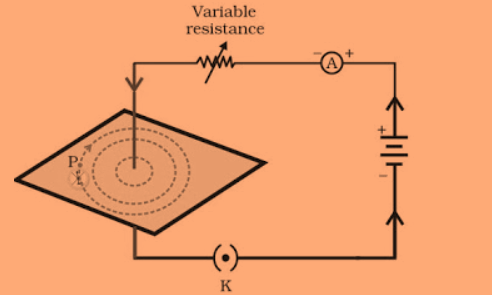


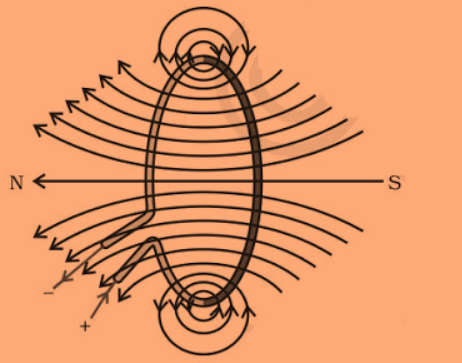


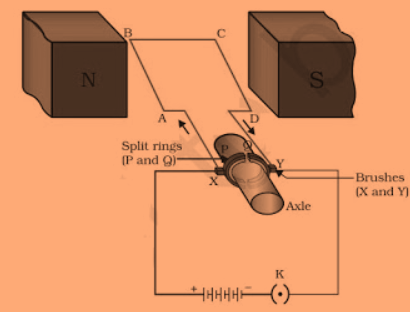
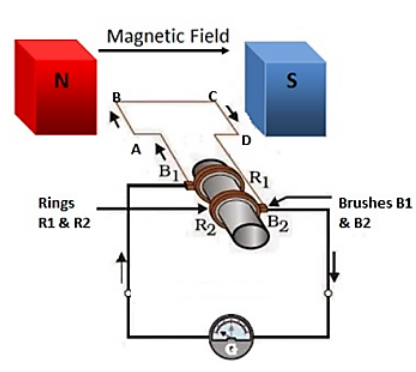




 2NaCl (Brine) + 2H2O 2NaOH (Caustic Soda) + Cl2 + H2At anode (+ve electrode): Cl2 is producedAt cathode (-ve electrode): H2 is producedIt is called chloro-alkali process because products formed are chlorine (Chloro) and NaOH (alkali).
 CaSO4.H2O (Plaster of Paris) +3/2 H2O* Heating of gypsum should not be done above 100oC as above that temperature, water of crystallisation will be eliminated and anhydrous CaSO4 will be obtained. This anhydrous CaSO4 is known as Dead Burnt Plaster.* CaSO4.1/2 H2O means that two molecules of CaSO4 share one molecule of water.PropertiesHas the remarkable property of setting into a hard mass on wetting with water, as gypsum is formed.CaSO4.1/2 H2O (P.O.P) + 1/2 H2O → CaSO4.2H2O (Gypsum set as hard mass)Hence, P.O.P should be stored in moisture-proof containers as moisture can cause slow setting of P.O.P by hydrating it.


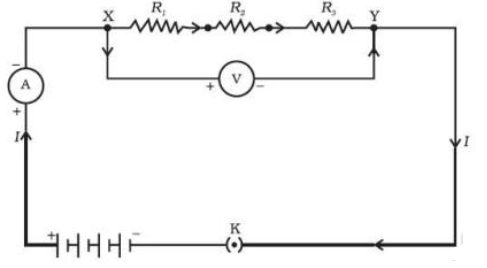

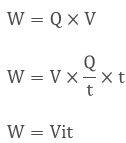
 .
.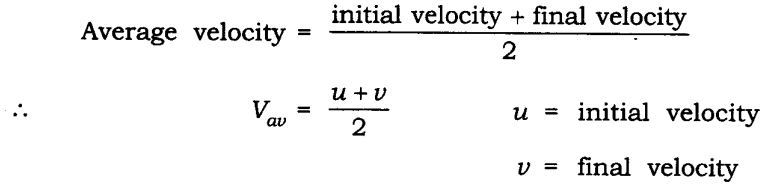

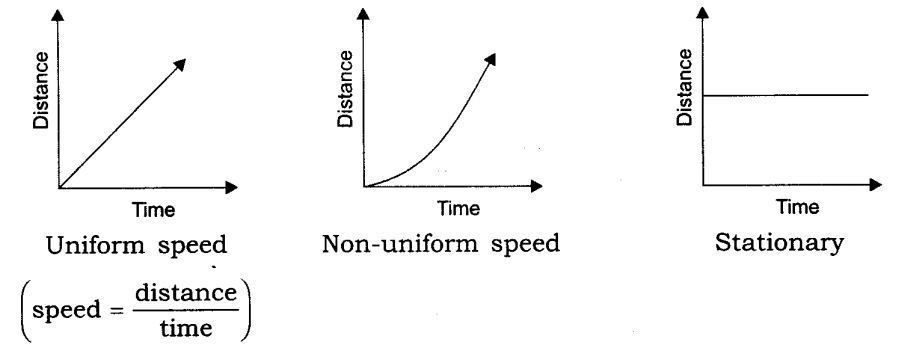
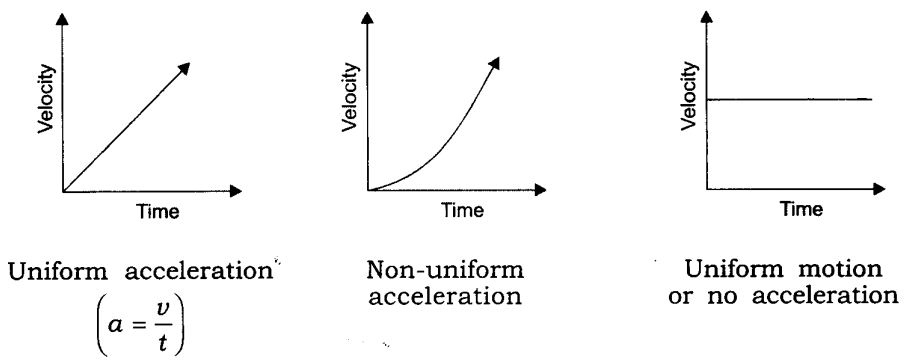
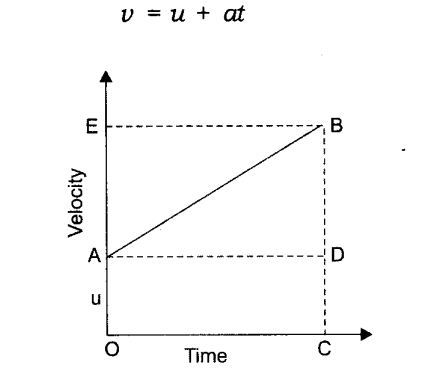
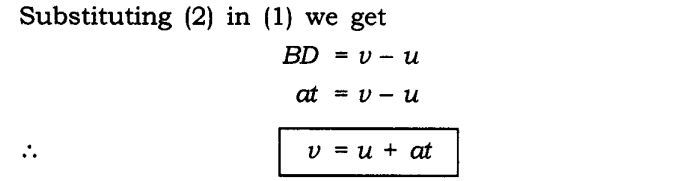
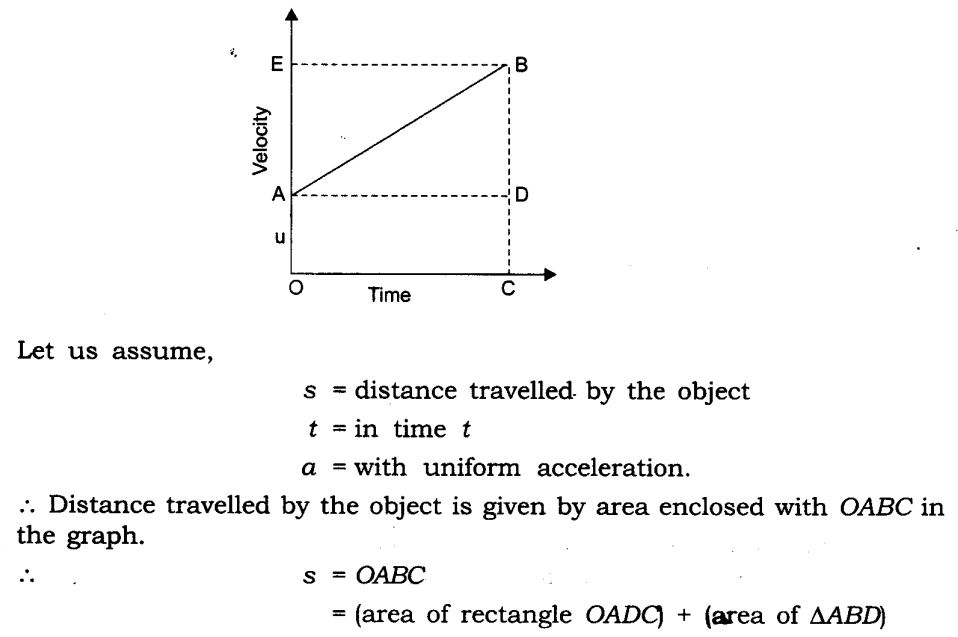
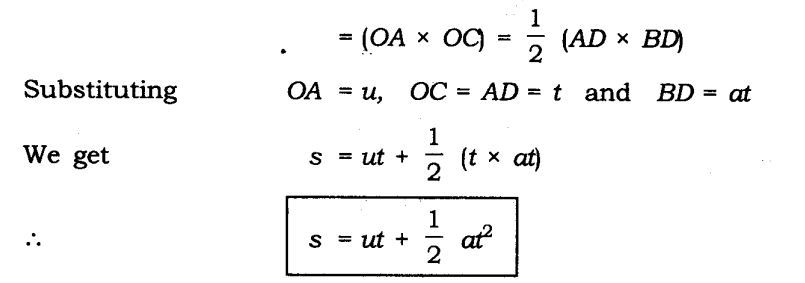
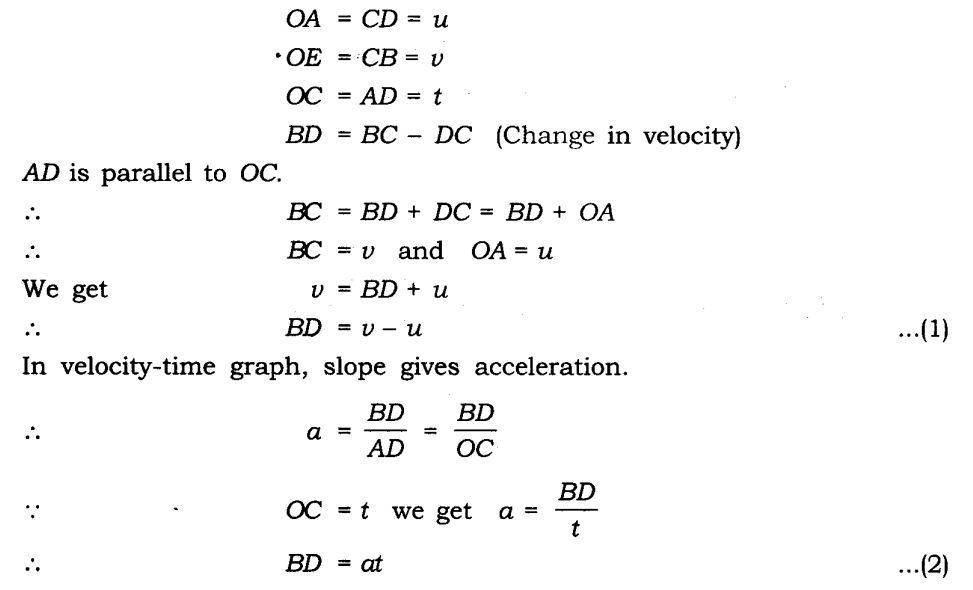
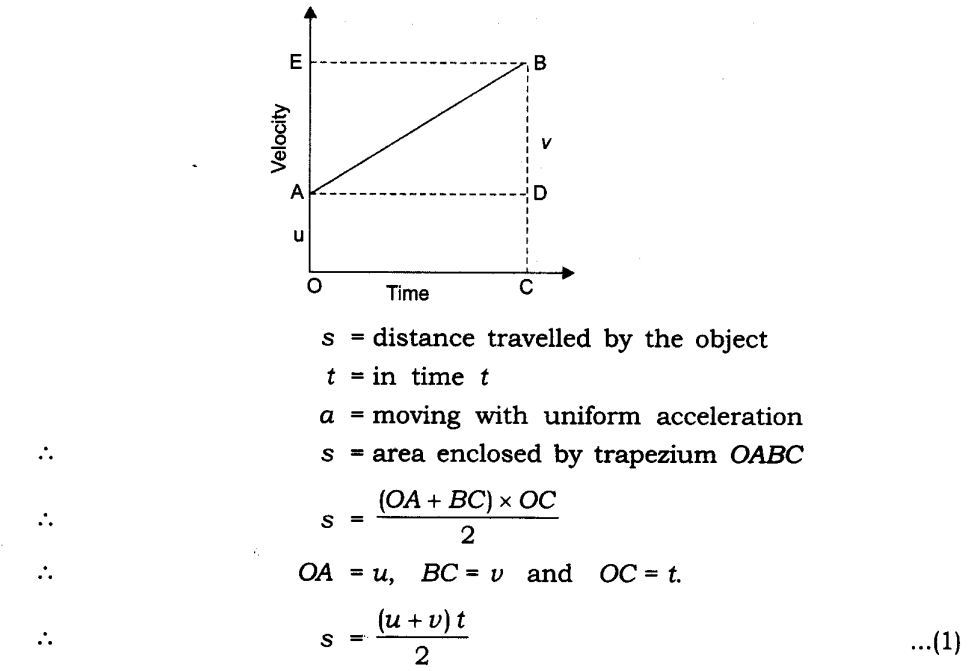
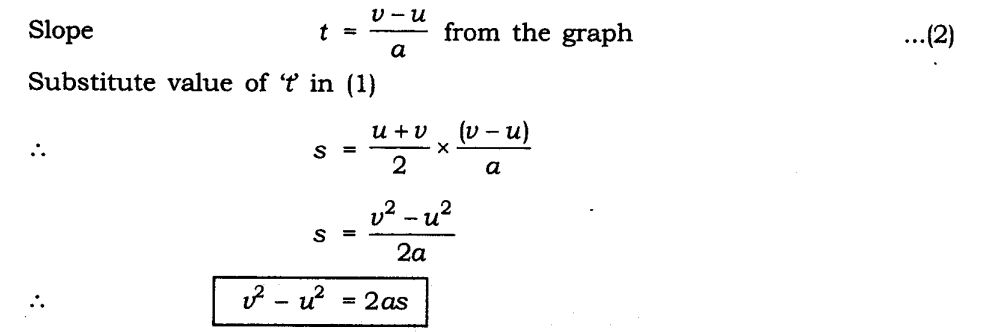


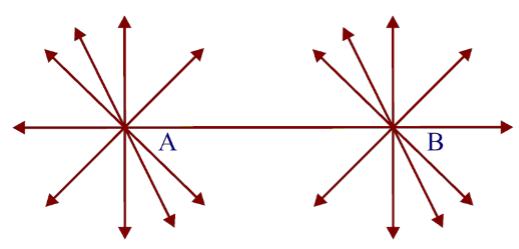
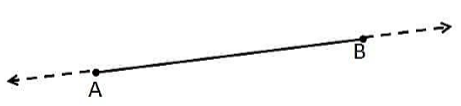
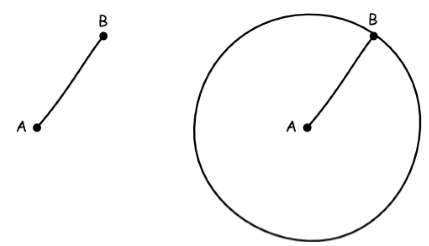
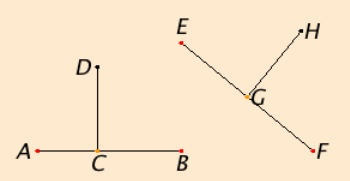





Leave a Reply
You must be logged in to post a comment.